
create_via_variant
create_via_variant -names_viaVariantName-via_def_names_viaDefName-cut_widthf_userunit-cut_heightf_userunit-cut_spacing {f_x f_y} -layer1_enclosure {f_x f_y} -layer2_enclosure {f_x f_y} [-db {tech | design}] [-num_colsi_value] [-num_rowsi_value] [-origin_offset {f_x f_y} | -auto_origin_offset {positive_layer1 | negative_layer1 | positive_layer2 | negative_layer2} -wire_widthf_userunit] [-layer1_offset {f_x f_y}] [-layer2_offset {f_x f_y}] [-implant1_enclosure {f_x f_y}] [-implant2_enclosure {f_x f_y}]
Description
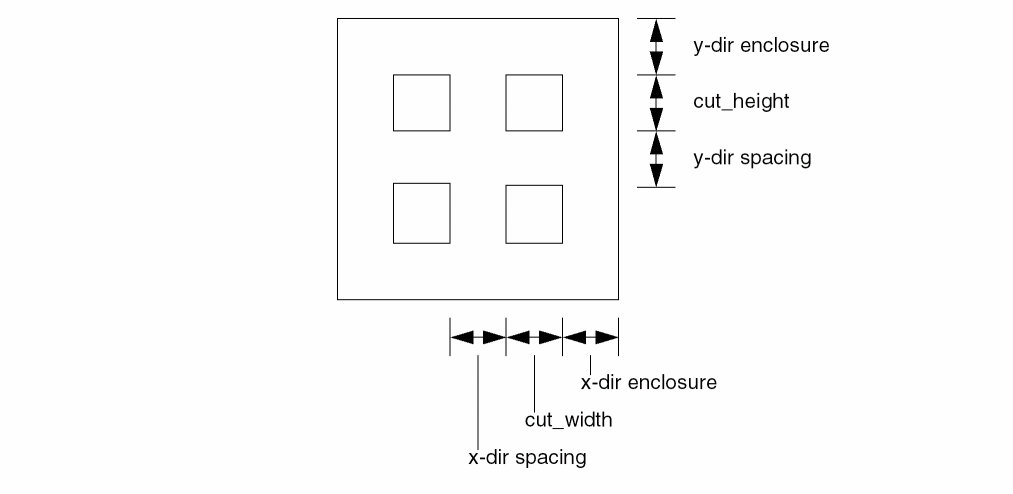
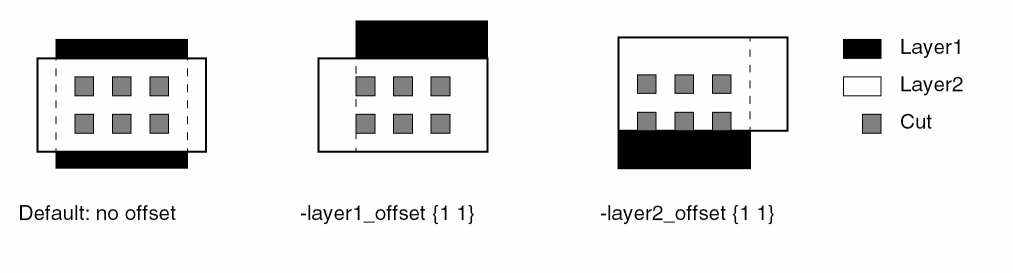
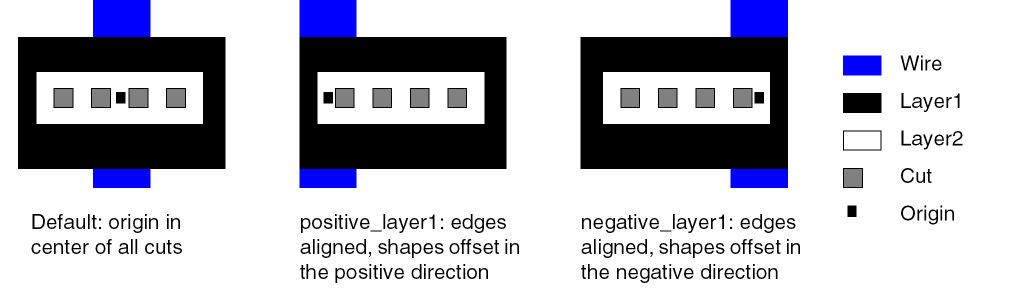
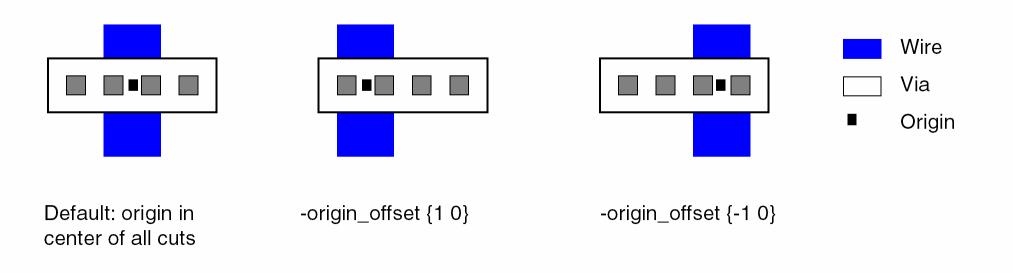
Creates an OpenAccess standard via variant, a permutation of a standard via. The new standard via variant is assigned the given name and represents a pairing of the given via definition in the technology database, and a full set of via parameters.
After creating via variants with this command, you must add the via variant names to the proper constraints in order to use them for routing.
By default, via variants are created in the technology database (
-db tech) and can be referenced by constraints, such as validRoutingVias and validWireEditorVias, in the design database or in the technology database. Via variants created in a design database can only be added to constraints in that database and not to constraints in the technology database.Arguments
Examples
Creates a standard via variant named stdvia_m1m2_2x2 in the technology database for the stdvia_m1m2 via definition in the technology database.
create_via_variant -name "stdvia_m1m2_2x2" -via_def_name "stdvia_m1m2" \
 -num_rows 2 -num_cols 2 -cut_width .2 -cut_height .2 \
 -cut_spacing {.1 .2} -layer1_enclosure {.05 .05} -layer2_enclosure {.05 .1}
Related Topics
Return to top