
Connectivity Extraction from Mosaics
The connectivity extractor processes overlaps with each tile of a mosaic (oaArrayInst object) in the same way as it processes overlaps with regular instances.
- Overlaps are processed between tiles of the same mosaic.
- For pin figures that are not routed together, open markers are created if the pin figures are:
Let us now consider some examples that illustrate how the connectivity extractor processes overlaps with mosaics:
Example 1: Consider a 2x2 physical-only mosaic with vertically abutting tiles, as shown in the figure below.
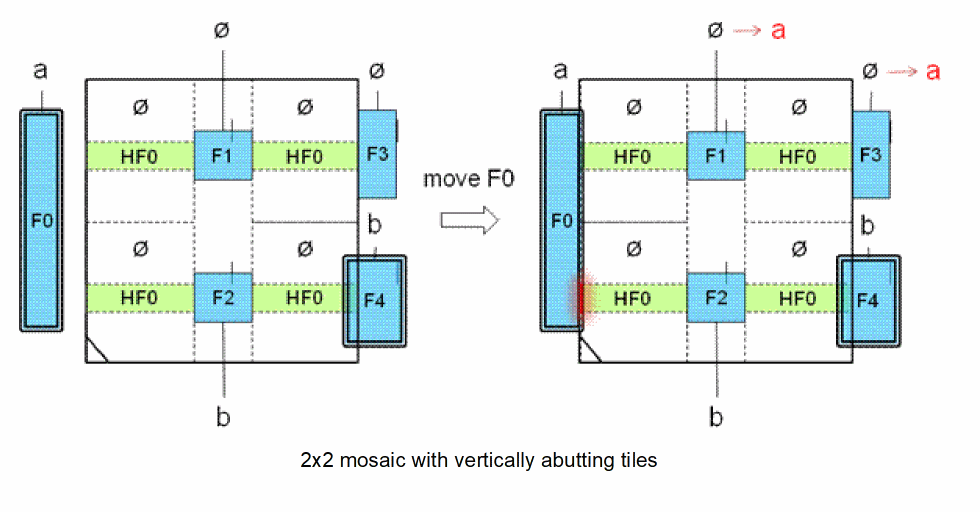
Here, F1 and F2 are ECV shapes that connect the hierarchical shapes between the tiles.
An ECV shape (edited cellview shape) is a shape in the edited cellview or a pin figure of a master that has been instantiated in the edited cellview.
If ECV shape F0 is moved horizontally to overlap the hierarchical shapes in the two left tiles of the mosaic, connectivity is propagated from F0 to F1 and F3. In addition, a short marker is created between F0 and F2 because the two are assigned to different nets, resulting in connectivity violation due to the overlap.
Example 2: Consider a 2x2 same-connectivity mosaic, as shown in the figure below.
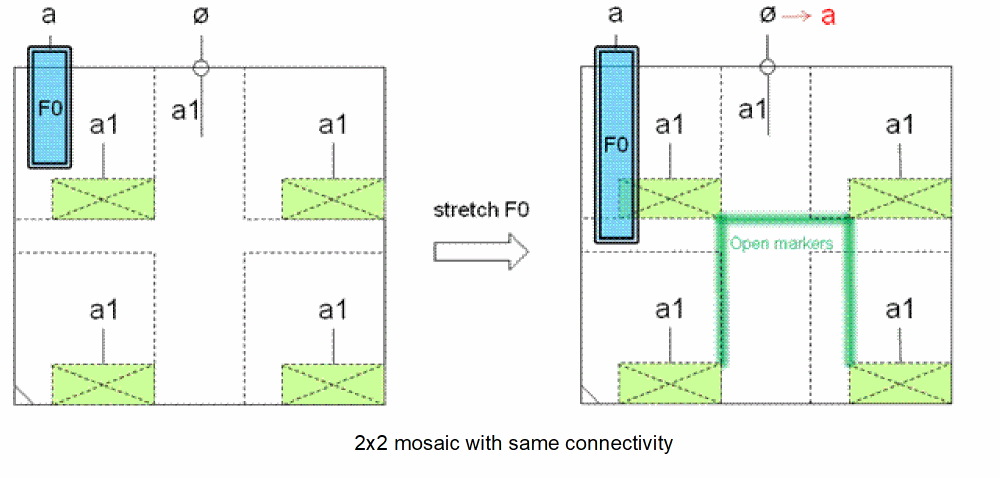
Here, the ECV shape F0 is stretched to overlap the pin figure in the top-left tile of the mosaic. As a result, the unassigned instTerm, a1, which is common to all the tiles of the mosaic, is assigned to net a. Since the pin figures on terminal a1 are all on different tiles and not overlapping, open markers are created between these pin figures.
Example 3: Consider a 3x1 same-connectivity mosaic with horizontally-abutting tiles, as shown in the figure below.
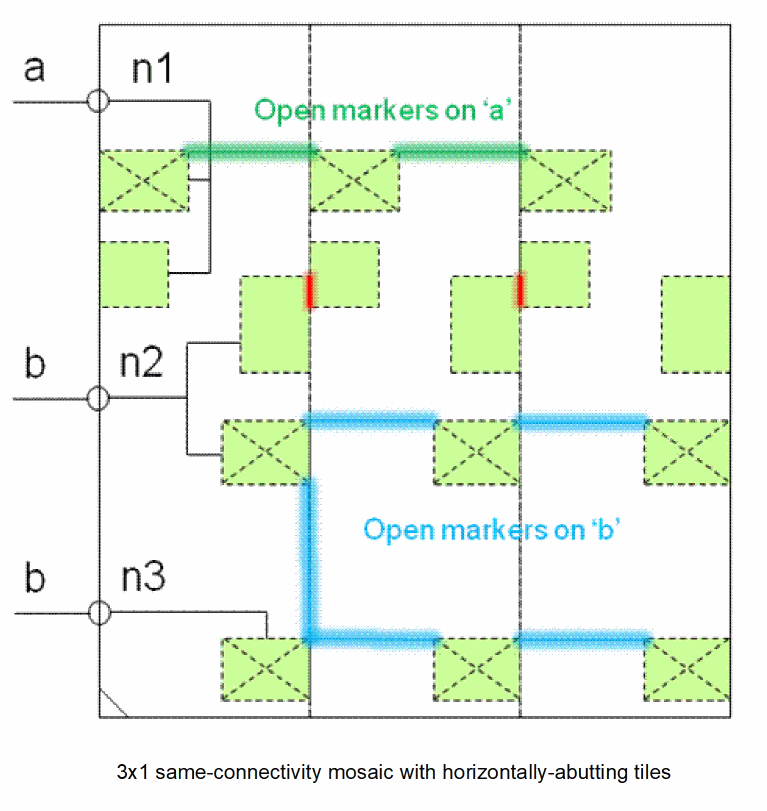
Here, the master has three terminals, n1, n2, and n3,connected to nets a, b, and c, respectively.
If the tiles are made to abut horizontally, overlaps are observed between hierarchical shapes that are connected to instance terminals n1 and n2. Since these overlapping shapes draw their connectivity from different ECV nets, net a and net b, two short markers are created for net a and net b at the overlap of these hierarchical shapes. In addition, two open markers are created on net a for the pin figures of terminal n1 because these are pin figures from the same terminal that lie on different tiles.
Open markers are also created for net b. These include:
- One open created between pin figures of terminals n2 and n3 as these are pin figures of different terminals lying on the same tile.
- Two opens created between the pin figures of terminal n2 as these are pin figures of the same terminal but on different tiles. Likewise, two opens are created between the pin figures of terminal n3 as the other corresponding pin figures of this instance terminal are on different tiles.
Related Topics
Return to top