
dbGetTrueOverlaps
dbGetTrueOverlaps(d_cellView l_bBox[l_layerPurposePair|tx_layer|g_value{t | nil} ] [lx_level] [g_doRowCol] ) =>ld_fig/ nil
Description
Returns a list of all the objects (such as, vias, shapes, instances, and mosaics) in a cellview that overlap the area specified by l_bBox.
If the object comes from a lower level in the hierarchy, instead of from the specified cellview, the object is represented by a list (potentially a nested list, if it comes from more than one level down). Each level of the list has the ID of the instance in the corresponding level in the hierarchy.
For example, if there is a rectangle in a master cellview two levels down, for this rectangle, in the top cellview, the function will return a nested list. The output of this function is same as dbGetOverlaps.
You can switch the output syntax of dbGetTrueOverlaps between the new and legacy format by setting the noDetailedRow .cdsenv environment variable.
Arguments
Value Returned
Examples
shapeList finds all the shapes on the device layer with drawing purpose on the top level.
shapeList = dbGetTrueOverlaps(cv cv~>bBox "device")
shapeList finds all the shapes on the device layer (with any purpose) on the top level.
shapeList = dbGetTrueOverlaps(cv cv~>bBox list("device"))
shapeList finds all the shapes on the device layer with pin purpose on the top level.
shapeList = dbGetTrueOverlaps(cv cv~>bBox list("device" "pin"))
figList finds all the mosaics and instances on the top level.
figList = dbGetTrueOverlaps(cv cv~>bBox nil)
figList finds all the shapes, mosaics, and instances on the top level.
figList = dbGetTrueOverlaps(cv cv~>bBox)
figList finds all the shapes, mosaics, and instances from the top level to the level 5.
figList = dbGetTrueOverlaps(cv cv~>bBox t 0:5)
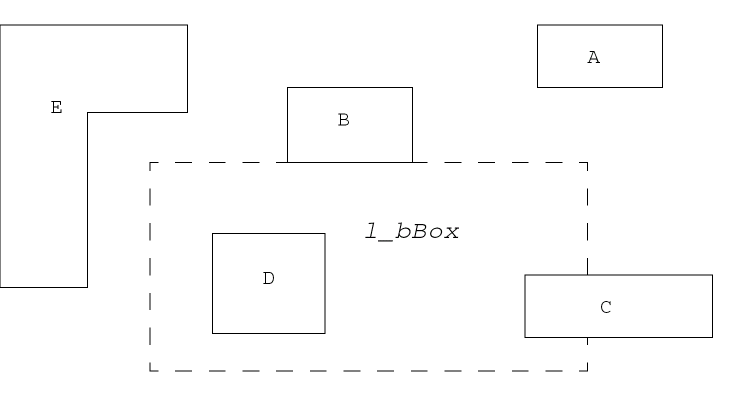
The illustration below shows that l_bBox overlaps the perimeters of B, C, and D.
For more information, see the environment variable.
Related Topics
Figure Creation and Retrieval Functions
Return to top