
rteGeomAnd
rteGeomAnd(
[ ?cv d_cvId ]
[ ?lpp1 g_lpp1 ]
[ ?lpp2 g_lpp2 ]
[ ?outputLpp l_outputLpp ]
[ ?blockedLayer l_blockedLayer ]
[ ?polygons g_polygons ]
[ ?region l_region ]
) ;
=> t / nil
Description
Generates new shapes that are common on two or more layer purposes.
Arguments
|
Database ID of the cellview. Defaults to the current cellview. |
|
|
Specifies the first layer purpose pair(s). Required. See Specifying Input Layer Purposes for details. |
|
|
Specifies the second layer purpose pair(s). Required. See Specifying Input Layer Purposes for details. |
|
|
Specifies the output layer and purpose for the generated shapes. Required. You must specify both the layer name and the layer purpose as a list or string. |
|
|
Outputs blockages on the specified layer. Note: the ?blockedLayer and ?outputLpp arguments are mutually exclusive. |
|
|
Generates output shapes as polygons, rather than individual rectangles. Values are
If set to
If set to |
|
|
A list specifying the lower-left and upper-right coordinates of the region on which the function should operate. If not specified, the entire design is included in the operation. |
|
Value Returned
Examples
The following is a graphical illustration of the rteGeomAnd function.
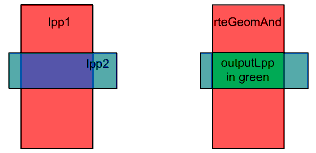
The following example generates new shapes on the metal5/drawing layer purpose that are common on the metal2/drawing and metal1/pin layer purposes.
rteGeomAnd(
?lpp1 list("metal2" "drawing")
?lpp2 list("metal1" "pin")
?outputLpp list("metal5" "drawing")
?region list(2486.75 2850.75 2635.22 2946.52)
)
The following example is the same as the one above, but both layer purposes are included in the ?lpp1 argument.
rteGeomAnd(
?lpp1 list(
   list("metal2" "drawing")
   list("metal1" "pin"))
?outputLpp list("metal5" "drawing")
?region list(2486.75 2850.75 2635.22 2946.52)
)
In the following example, 48 is the layer number representing metal1. Argument ?lpp1 includes all purposes for layer metal1. In argument ?lpp2, the layer purpose pair is specified as a string. This is allowed, as the argument contains only one layer.
rteGeomAnd(
?lpp1 48
?lpp2 "metal2 drawing"
?outputLpp list("metal5" "drawing")
?region list(2486.75 2850.75 2635.22 2946.52)
?polygons t
)
The following example outputs blockages on metal4.
rteGeomAnd(
?lpp1 list("poly")
?lpp2 list("oxide")
?blockedLayer "metal4")
Related Topics
Return to top