
eyeHeightAtXY
eyeHeightAtXY(o_eyeDiagram f_x f_y[?outputt_output] ) =>f_eyeHight/nil
Description
Calculates the eye height at the specified point (x, y) inside the eye diagram.
Eye height is the difference of two intercepts made with the innermost traces of the eye in the direction of y axis.
Arguments
Value Returned
Examples
The following example creates a Waveform window and returns its window ID.
awvCreatePlotWindow()
=> window:3
The following example opens simulation results stored in the specified directory.
openResults("/servers/user/design/prbs.raw")
=> "/servers/user/design/prbs.raw"
The following example lists the results contained in the results directory /servers/user/design/prbs.raw.
results()
=> tran()
The following example selects the tran results.
selectResult('tran)
=> stdobj@0x321eab00
The following example creates a waveform object eye that represents an eye diagram created using a signal jitter, which is available in the tran results of the results directory /servers/user/design/prbs.raw.
eye=eyeDiagram(v("jitter" ?result "tran-tran") 200n 1.4u 2*40n ?autoCenter t )
=> srrWave:0x364bc030
The following example plots the eye diagram in the Waveform window that you created using the function awvCreatePlotWindow.
awvPlotWaveform(
window(3)
list(eye)
?expr list("eyeDiagram")
?color list("y6")
?index list(1)
?lineType list("line")
?lineStyle list("dot")
?lineThickness list("thick")
)
=> t
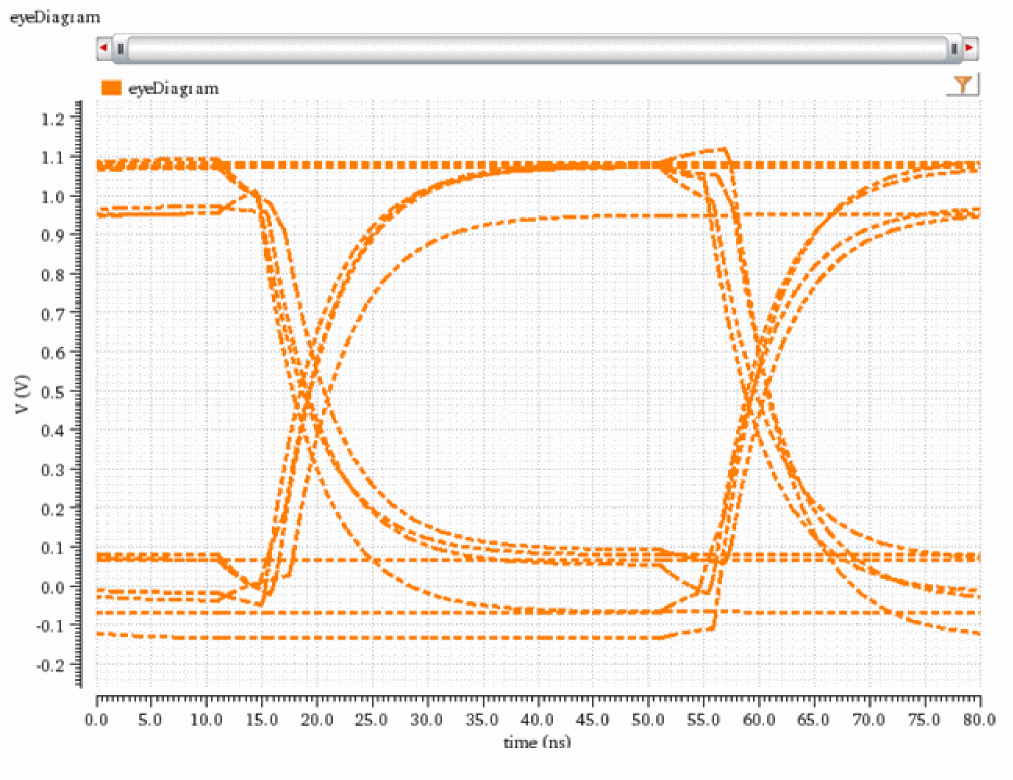
The following example places a horizontal marker at y=0.5V (500mV).
awvPlaceYMarker(window(3) 0.5 ?label "H1at500mV")
=> "horizMarker[1.1.1]"
The following example places a vertical marker at x=40ns.
awvPlaceXMarker(window(3) 40n ?label "V1 at 40ns")
=> "vertMarker[1.1.1]"
The following example places a point marker M1 at x=40ns and y=500mV.
awvPlacePointMarker(window(3) 1 40n 500m ?positionMode "xy")
=> "pointMarker[1.1.1]"
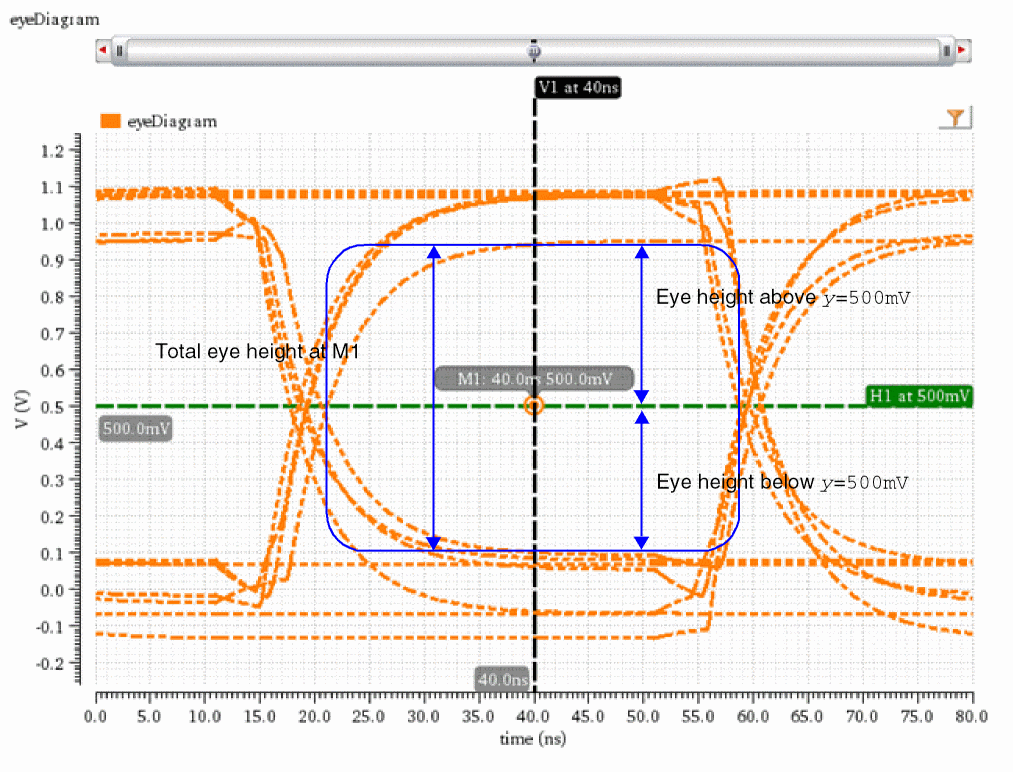
The following example calculates the total eye height of eye diagram eye at point M1 whose x-axis and y-axis coordinates are 40ns and 0.5, respectively.
eyeHeightAtXY(eye 40n 0.5 ?output "total")
=> 0.8399164
The following example calculates the eye height that is above y=0.5V (500mV) at point M1 (x=40ns, y=0.5).
eyeHeightAtXY(eye 40n 0.5 ?output "above")
=> 0.4397585
The following example calculates the eye height that is below y=0.5V (500mV) at point M1 (x=40ns, y=0.5).
eyeHeightAtXY(eye 40n 0.5 ?output "below")
=> 0.4001579
Note that total eye height at any point inside the eye diagram is equal to the sum of eye heights above and below that point.

Return to top