
minExtension
Specifies the minimum distance a shape on layer1 must extend past a shape on layer2. Extensions are specified from the outside edge of the shape on the second layer to the inside edge of the shape on the first layer. This constraint definition is not symmetric, implying that the minimum extension of layer1 past layer2 is not the same as the minimum extension of layer2 past layer1. The constraint applies only if parallel run length between the shapes is greater than zero.
minExtension Quick Reference
Value Types
-
Value
Specifies the minimum extension in user units.
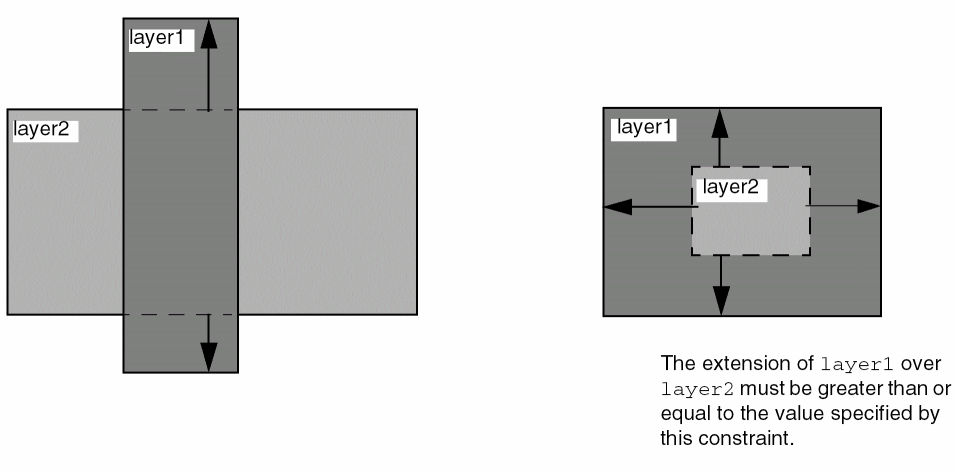
-
OneDTblValue
Specifies the minimum spacing that changes according to the width of the wider of the two shapes. The width of the wider shape is the lookup key for the table. The table value is the minimum spacing. The width of a shape is defined as the smaller of the shape’s two dimensions.
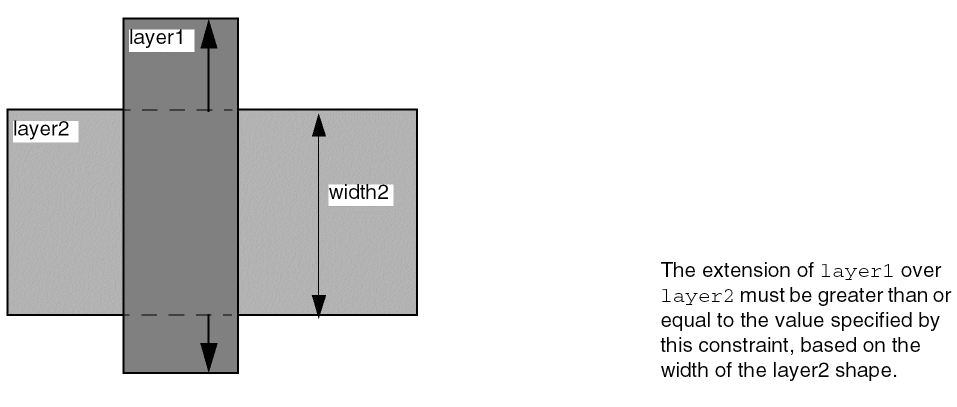
Parameters
-
coincidentAllowed(BoolValue, optional) specifies whether shapes must meet the minimum extension or their edges can be coincident (true). By default and when set tofalse, the edges cannot be coincident. -
cutClass(DualValue, optional) specifies that the constraint applies for vias of the specified cut class. -
oaSpacingDirection(IntValue, optional) specifies that the constraint applies only to extensions measured in this direction. Valid values: 0 any 1 horizontal 2 vertical -
exceptEdgeLengthRange(RangeArrayValue, optional) specifies that the constraint does not apply if the via edge length falls within the specified range.
Examples
Example 1—minExtension with a fixed value
This example sets the minimum extension of Metal1 over Metal2 to 2.5.
| Format | Example |
|---|---|
set_layerpair_constraint -constraint minExtension \ |
|
orderedSpacings( |
Example 2—minExtension 1D Table: Index width
This example sets the minimum extension of Metal1 over Metal2, based on the width of the Metal2 shape.
| Format | Example |
|---|---|
set_layerpair_constraint -constraint minExtension \ |
Related Topics
Return to top