
minExtensionEdge
Specifies the minimum extension of shapes on layer1 past shapes on layer2. Typically, layer1 is a metal layer and layer2 is a cut layer. The specified extension is typically larger than minExtension and minDualExtension values. The larger minExtensionEdge value is required only if the following conditions are met:
-
The extension is only required if the metal enclosing the cut has width >=
width, a parallel metal edge that is less thanparallelEdgeWithinuser units away with a parallel run length >parallelEdgeLength. - The extension may be required only for cut shapes of particular cut classes, identified by their via width and height/length.
-
For some processes, the rule does not apply if there is an extra cut and may require the extra cut to be less than or equal to
oaDistanceWithinuser units away. -
For some processes, the rule does not apply if there are two edges on either side of the metal shape that have parallel run length >
parallelEdgeLengthand withinparallelEdgeWithin, parallel to the enclosing metal edge.
minExtensionEdge Quick Reference
Value Type
|
Represents the overhang of layer1 past layer2, in user units. |
Required Parameters
Optional Parameters
|
Specifies that the constraint applies only to a cut class of the given dimensions.
Type: |
|
|
Specifies that if the overhang on the layer above the cut layer of a via cut is less than or equal to the value of the constraint, the entire opposite edge must also have overhang less than or equal to the constraint value.
Type: |
|
|
Specifies that if this parameter is set and both overhangs are less than or equal to the value of the constraint, the overhang edges cannot be end-of-line edges with a length less than this parameter value.
Type: |
|
|
Specifies that if this parameter is set and both overhangs are less than or equal to the value of the constraint, there must not be a concave corner on the above metal layer within this distance of the opposite overhang edges.
Type: |
|
|
Specifies that if this parameter is set and both overhangs are less than or equal to the value of the constraint, the distance between the cut edge to a different net wire on the above metal layer must be greater than or equal to this value.
Type: |
|
|
Specifies that the constraint applies only if any edge of the cut layer is enclosed by metal that is greater than or equal to this width (minWidth).
Type: |
|
|
Specifies that the constraint applies only if the parallel neighbor metal is greater than or equal to this value in width (parWidth).
Type: |
|
|
Specifies that the width of the wire containing the via cut must be greater than or equal to
Type: |
|
|
Specifies that the width of the wire does not affect whether the constraint applies; instead, the enclosure edge rule applies if the span length of the wire containing the cut via in the direction perpendicular to the parallel run length is greater than or equal to this value.
Type: |
|
|
Specifies that the enclosure rule applies if the span length of the wire containing the cut via in the direction perpendicular to the parallel run length is greater than or equal to
Type: |
|
|
Specifies that the constraint applies when the parallel edge length (parLength) of the enclosing metal edge to another metal edge is greater than this value.
Type: |
|
|
Specifies that the constraint applies when the distance (parWithin) between a parallel metal edge and the enclosing metal edge is less than this value.
Type: |
|
|
Specifies that the constraint applies only if the parallel neighbor metal edge is greater than or equal to this distance away.
Type: |
|
|
Specifies that the constraint does not apply when there is another via cut in the same metal intersection, if set to
Type: |
|
|
Specifies that the constraint does not apply if
Type: |
|
|
Specifies that the constraint does not apply if the enclosing metal edges have parallel metal edges longer than
Type: |
|
|
Specifies that the
Type: |
|
|
Specifies that the constraint applies to the corner of the cut, using Euclidian measurement.
Type: |
|
Examples
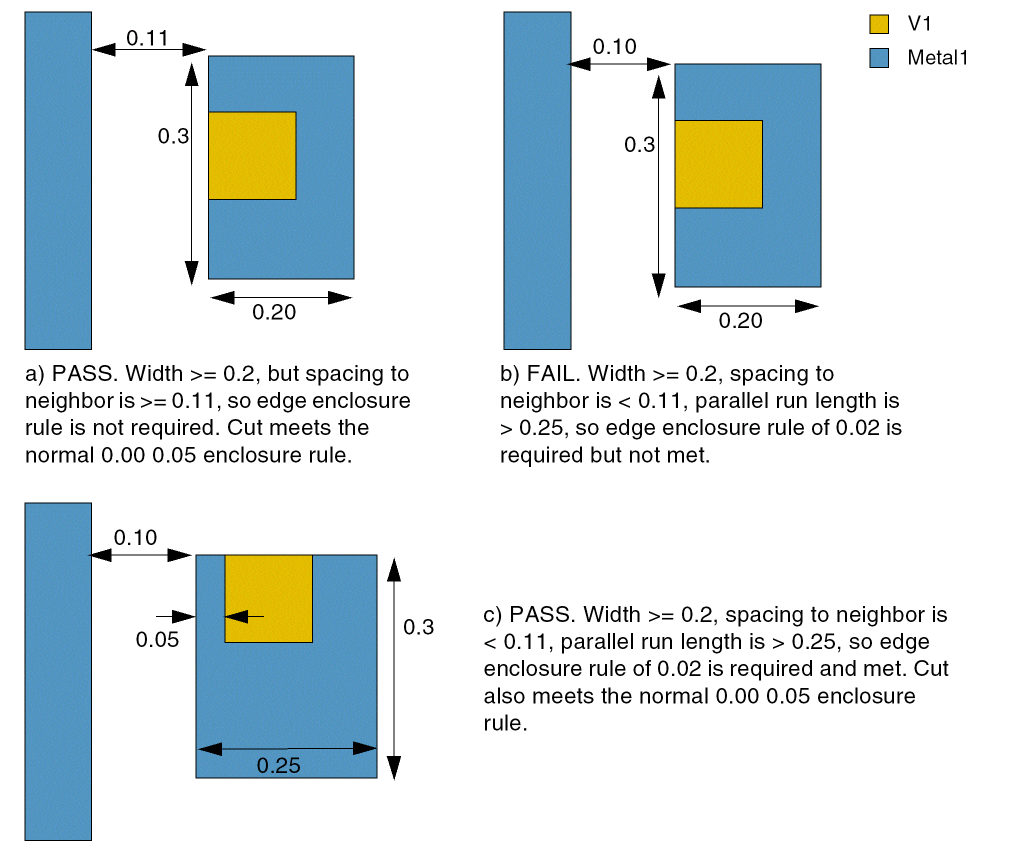
Example 1: minExtensionEdge
set_layerpair_constraint -constraint minDualExtension \
  -layer1 Metal1 -layer2 V1 -DualValue ( 0.0 0.05)
set_constraint_parameter -name width -Value 0.2
set_constraint_parameter -name parallelEdgeLength -Value 0.25
set_constraint_parameter -name parallelEdgeWithin -Value 0.11
set_layerpair_constraint -constraint minExtensionEdge \
  -layer1 Metal1 -layer2 V1 -Value 0.05
Requires an extension of 0.02 user units only if both of the following conditions are true:
-
The
V1via is enclosed byMetal1greater than or equal to 0.2 in width. -
There is a
Metal1edge less than 0.11 user units away from the enclosing metal with a parallel run length greater than 0.25 user units.
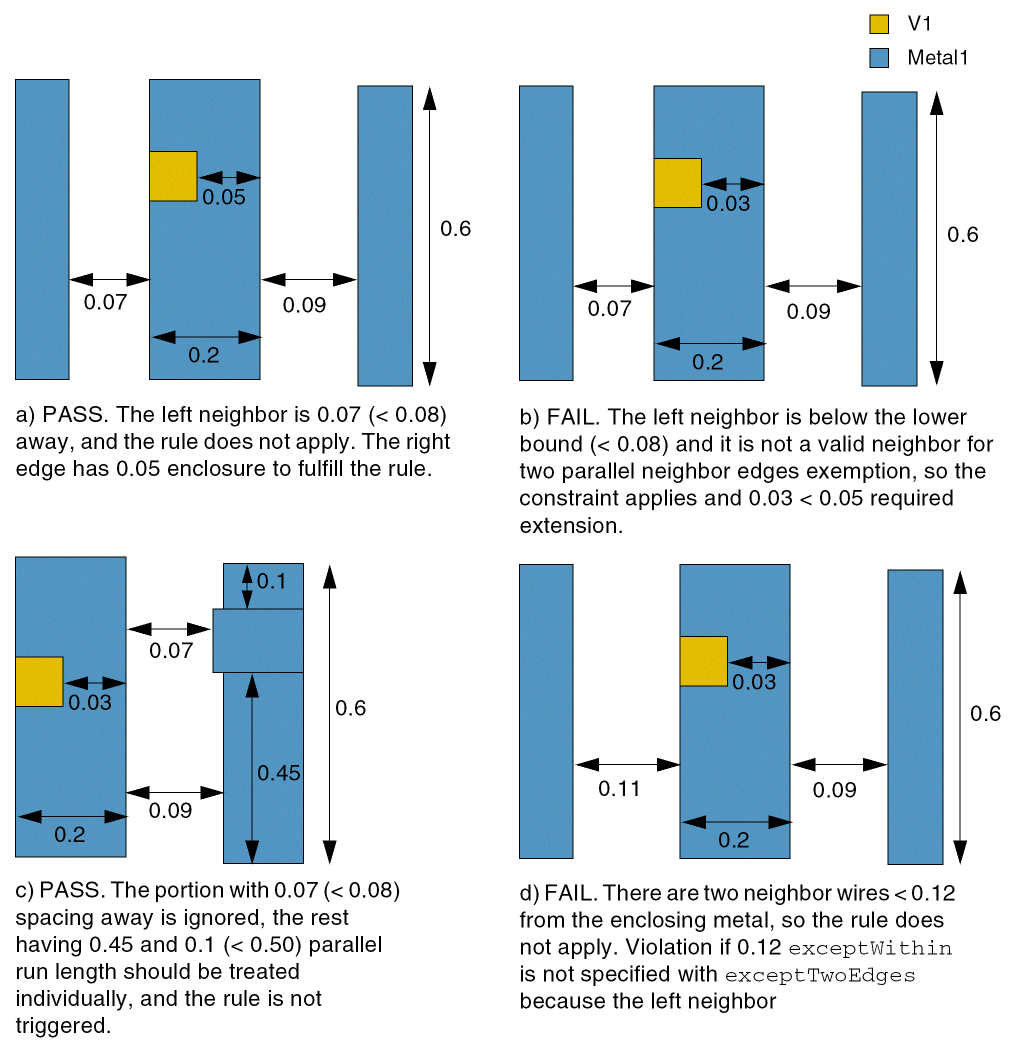
Example 2: minExtensionEdge with exceptTwoEdges
set_constraint_parameter -name width -Value 0.2
set_constraint_parameter -name parallelEdgeLength -Value 0.5
set_constraint_parameter -name parallelEdgeMinWithin -Value 0.08
set_constraint_parameter -name parallelEdgeWithin -Value 0.10
set_constraint_parameter -name exceptTwoEdges -BoolValue true
set_constraint_parameter -name exceptWithin -Value 0.12
set_layerpair_constraint -constraint minExtensionEdge \
  -layer1 Metal1 -layer2 V1 -Value 0.05
Requires an extension of 0.05 user units only if the V1 via is enclosed by Metal1 metal greater than or equal to 0.2 in width and there is a Metal1 edge greater than or equal to 0.08 and less than 0.11 user units away with a parallel run length greater than 0.5 user units, except when the enclosing metal edges have parallel metal edges longer than 0.5 that are greater than 0.12 away on opposite sides.
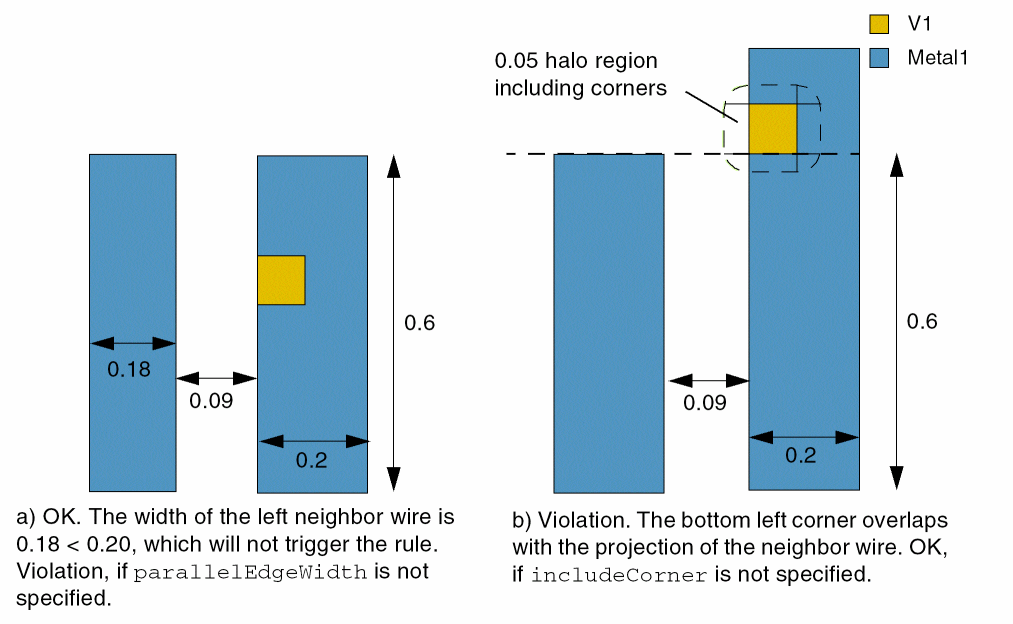
Example 3: minExtensionEdge with parallelEdgeWidth and includeCorner
set_constraint_parameter -name width -Value 0.2
set_constraint_parameter -name parallelEdgeLength -Value 0.5
set_constraint_parameter -name parallelEdgeWithin -Value 0.10
set_constraint_parameter -name parallelEdgeWidth  -Value 0.2
set_constraint_parameter -name includeCorner -BoolValue true
set_layerpair_constraint -constraint minExtensionEdge \
  -layer1 Metal1 -layer2 V1 -Value 0.05
Requires an extension of 0.05 user units, including corners, only if the V2 via is enclosed by Metal2 metal greater than or equal to 0.2 in width and there is a Metal2 edge less than 0.1 user units away with a parallel run length greater than 0.5 user units and the parallel neighbor metal is greater than or equal to 0.2 in width.
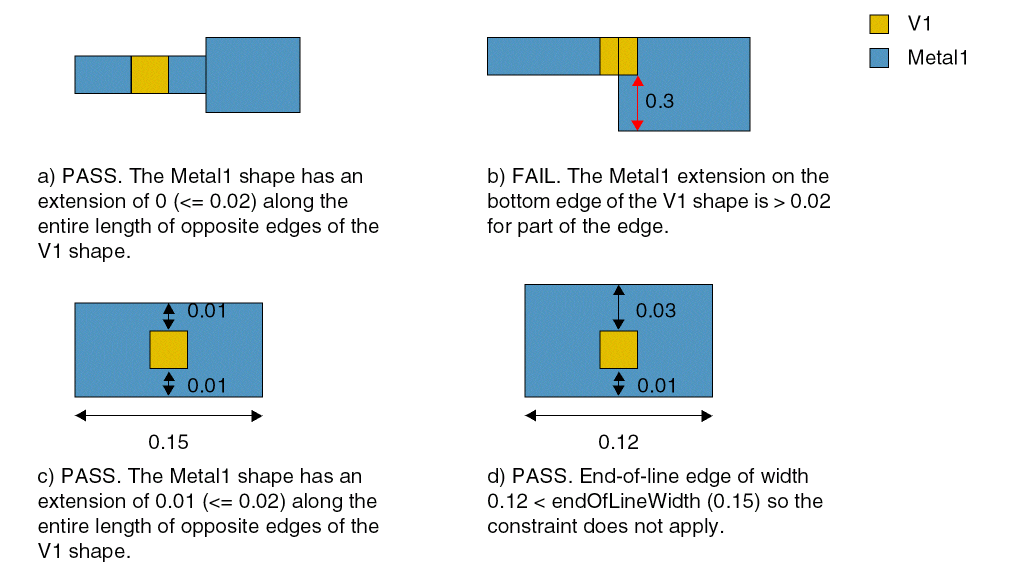
Example 4: minExtensionEdge with twoSides and endOfLineWidth
set_constraint_parameter -name endOfLineWidth -Value 0.15
set_constraint_parameter -name twoSides -BoolValue true
set_layerpair_constraint -constraint minExtensionEdge \
  -layer1 Metal1 -layer2 V1 -Value 0.02
Specifies that if an overhang on the layer above the cut layer of a via is less than 0.02 user units, then the entire opposite edge must also have an overhang less than or equal to 0.02, and the overhang edges cannot be end-of-line edges less than 0.15 user units in length.
Example 5: minExtensionEdge with twoSides, exceptConcaveCornerWithin and cutToMetalSpacing
set_constraint_parameter -name exceptConcaveCornerWithin -Value 0.05
set_constraint_parameter -name twoSides -BoolValue true
set_constraint_parameter -name cutToMetalSpacing -Value 0.07
set_layerpair_constraint -constraint minExtensionEdge \
  -layer1 Metal1 -layer2 V1 -Value 0.02
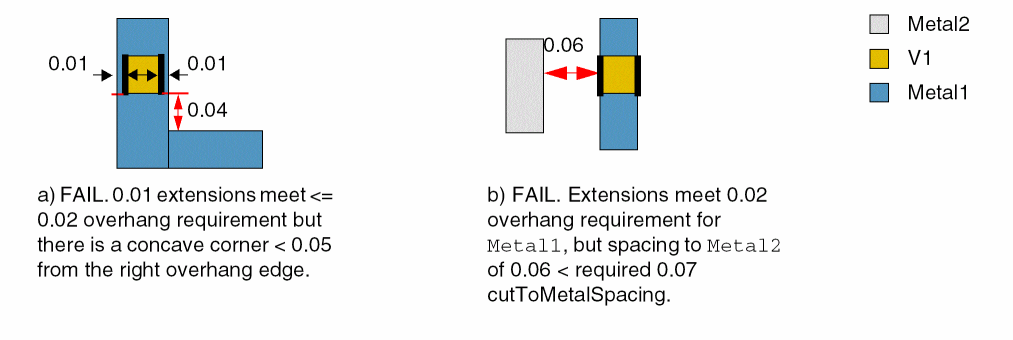
Specifies that if an overhang on Metal1 shape past a cut on V1 is less than 0.02 user units, then the entire opposite edge must also have an overhang less than or equal to 0.02. Additionally, there must not be a concave corner on Metal1 within 0.05 user units of those overhangs, and the spacing of a cut edge fulfilling the overhang requirement to a different net wire on Metal2 must be at least 0.07.
Example 6: minExtensionEdge with minSpanLength, parallelEdgeLength, and parallelEdgeWithin
set_constraint_parameter -name minSpanLength -Value 0.2
set_constraint_parameter -name parallelEdgeLength -Value 0.1
set_constraint_parameter -name parallelEdgeWithin -Value 0.09
set_layerpair_constraint -constraint minExtensionEdge \
  -layer1 Metal1 -layer2 V1 -Value 0.02
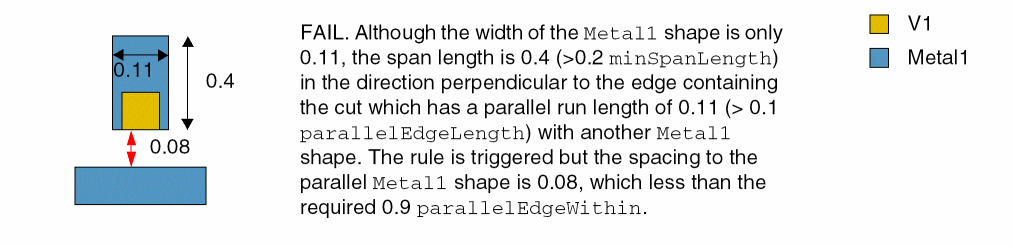
Specifies that the minimum enclosure edge depends on the span length of the Metal1 wire containing the V0 cut shape in the direction perpendicular to the parallel run length.
Related Topics
Return to top