
minNeighborExtension
Specifies the minimum extension of a shape on layer1 past a shape on layer2 on opposite pairs of sides, when the layer2 cut shape has a neighbor wire within less than the specified parallel within distance (parallelEdgeWithinRange), and a common parallel run length (parallelEdgeLengthRange) with the layer2 cut shape greater than or equal to the specified parallel run length on only one side.
layer2 cut shape and the neighbor wire should be less than the absolute value of the specified parallel run length.In addition, a second parallel within distance and parallel run length may be specified. The second parallel run length must be less than the first parallel run length and the second parallel within distance must be greater than the first parallel within distance. In this case, the constraint would be violated if there is a neighboring wire in the parallel within range (within within2) having a common parallel run length to the cut either less than the first parallel run length and greater than or equal to the second parallel run length on any one or both sides.
Also, the extensions required for wide wires are usually larger, but the minNeighborExtension can be even larger. Unless a cut is completely inside a wide wire, the minNeighborExtension constraint should also be checked. The minNeighborExtension constraint can optionally apply only when the layer1 wire containing the layer2 cut is less than a given width (maxWidth).
Optionally, the minimum neighbor extension only applies if the extension of the shape on the metal layer below is less than the specified other extension value (otherExtension) on either side perpendicular to the side of the layer2 cut having neighbors or the wire direction containing the cut on the metal layer above.
minNeighborExtension Quick Reference
Parameters
-
cutClass(DualValue, required) specifies that the constraint applies for the given cut class width and height onlayer2. -
parallelEdgeLengthRange(RangeValue, required) specifies the upper and, optionally, the lower bound for the parallel run length between the cut and the neighbor wire. If the parallel run length is a negative value, then the distance between thelayer2cut shape and the neighboring wire must be less than the absolute value of the specified parallel run length. -
parallelEdgeWithinRange(RangeValue, required) specifies the lower and, optionally, the upper bound for the within distance. -
otherExtension(Value, optional) specifies that the constraint applies only if the extension on the below metal layer is less than this value on either side perpendicular to the side having neighbors or the wire direction containing the cut on the above metal layer. To use a metal layer other than the below metal layer for this parameter, set thelayerparameter. -
layer(LayerValue, optional) specifies the layer on which theotherExtensionparameter applies. -
width(Value, optional) specifies that the constraint applies when the width of the wire containing the cut is less than this value.
Examples
Example—minNeighborExtension with One parallelEdgeLengthRange and parallelEdgeWithinRange
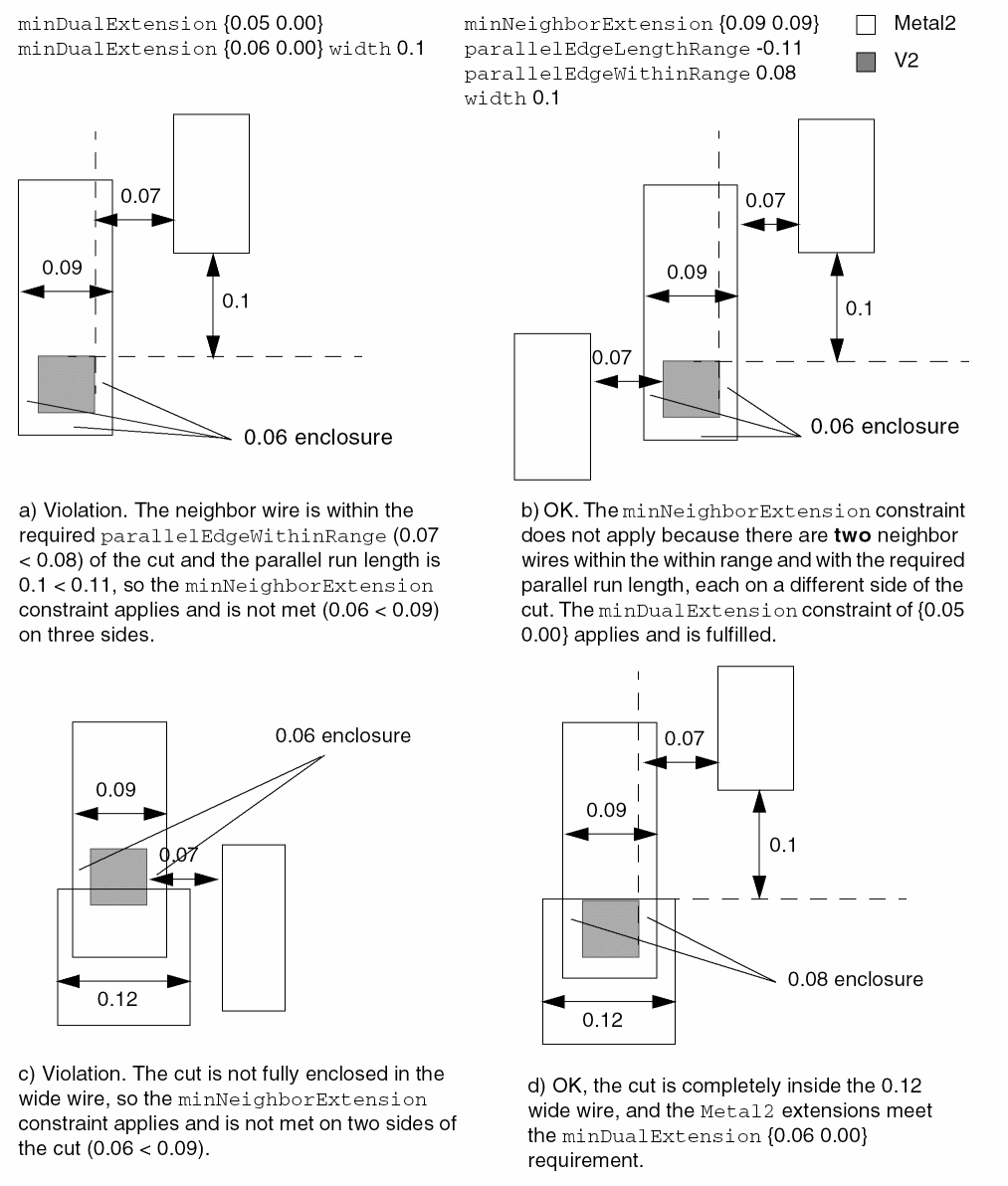
In this example, if there is a Metal2 neighbor wire less than 0.11um (parallelEdgeWithinRange) from a V2 cut with a common parallel run length greater than or equal to 0.08um (parallelEdgeLengthRange) on only one side of the cut, and the cut is on a Metal2 wire that is less than 0.1um in width (width), then the cut must have Metal2 extensions greater than or equal to 0.09um on all four sides. Otherwise, one of the following must be satisfied:
-
Metal2extensions pastV2cuts must be greater than or equal to 0.05um on two opposite sides, with zero extension required on the two other sides. -
If the width of the
Metal2wire containing theV2cut is greater than or equal to 0.1um, then theMetal2extensions must be greater than or equal to 0.06um on two opposite sides, with zero extension required on the two other sides.
Example—minNeighborExtension with Two parallelEdgeLengthRange and parallelEdgeWithinRange
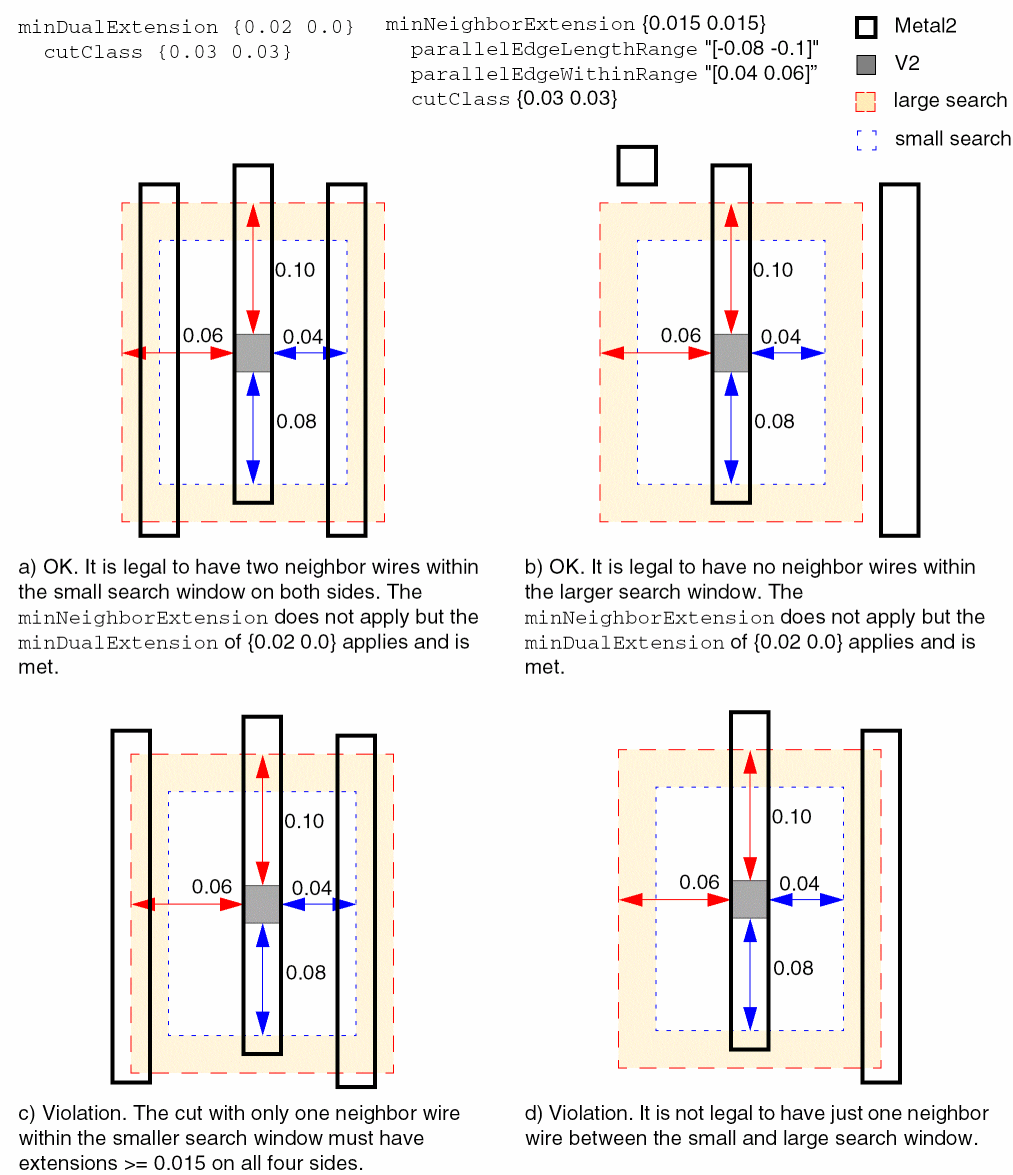
In this example, one of the following must be satisfied:
-
If there is a
Metal2neighbor wire less than 0.04um from aV20.03x0.03 cut with a common parallel run length greater than or equal to 0.08um on only one side of the cut, then the cut must haveMetal2extensions greater than or equal to 0.015um on all four sides. -
Metal2extensions pastV20.03x0.03 cuts must be greater than or equal to 0.02um on two opposite sides, with zero extension required on the two other sides.
In addition, it is only legal to have Metal2 neighbor wires on both sides that are less than 0.04um from the cut with common parallel run length to the cut less than 0.08um (within the small search window in the following figure, or, no neighbor on either side that is less than 0.06um from the cut with common parallel run length less than 0.1um (within the large search window in the following figure.
Example—minNeighborExtension with Two parallelEdgeLengthRange and parallelEdgeWithinRange and otherExtension
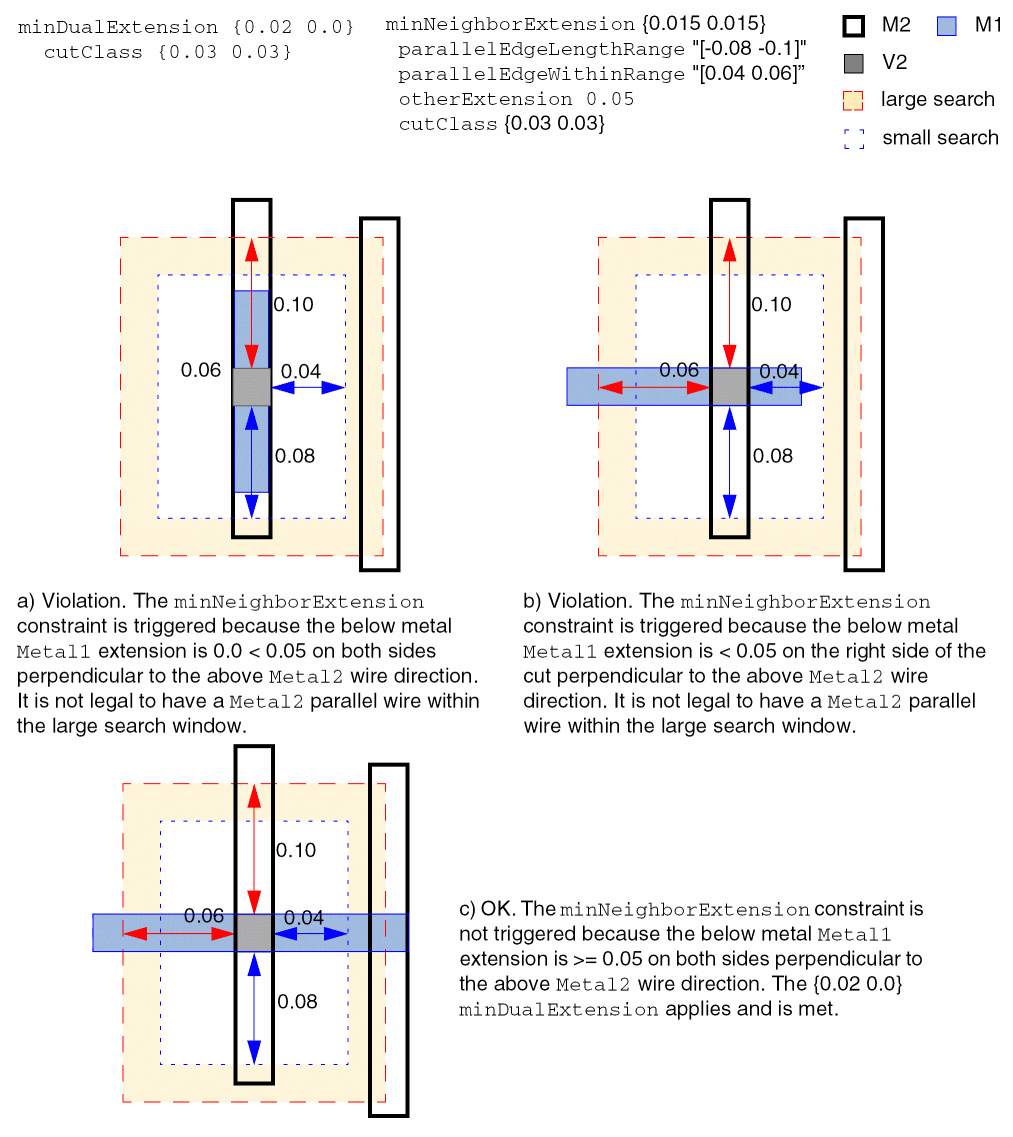
In this example, if a V2 0.03x0.03 cut has Metal1 extensions less than 0.05um on either side perpendicular to either the side having Metal2 neighbors or the Metal2 wire containing the cut, then the following applies:
-
If there is a
Metal2neighbor wire less than 0.04um from aV20.03x0.03 cut with a common parallel run length greater than or equal to 0.08um on only one side of the cut, then the cut must haveMetal2extensions greater than or equal to 0.015um on all four sides. -
It is only legal to have
Metal2neighbor wires on both sides that are less than 0.04um from the cut with common parallel run length to the cut less than 0.08um, or, no neighbor on either side that is less than 0.06um from the cut with common parallel run length less than 0.1um.
Otherwise, Metal2 extensions past V2 0.03x0.03 cuts must be greater than or equal to 0.02um on two opposite sides, with zero extension required on the two other sides.
Related Topics
Return to top