
minViaJointExtension
Some processes require an extension for joint edges that is different from the extension to other edges. The minViaJointExtension constraint specifies the minimum extension from a cut on layer1 to two consecutive layer2 joint edges, and can optionally apply to a specific cut class.
The first layer (layer1) should be the cut layer and the second layer (layer2) should be an interconnect or routing layer.
This constraint is not symmetric.
minViaJointExtension Quick Reference
|
|
|
Value Types
minViaJointExtension constraints have the following value types:
-
Value
Represents the required extension, in user units, of the interconnect or routing layer shape past the cut shape to one of the joint edges. -
DualValue
The first value is the required extension, in user units, of the interconnect or routing layer shape past the cut shape to one of the joint edges. The second value is the required extension to both joint edges. If either requirement is met, the constraint is satisfied.
Parameters
-
cutClass(DualValue, optional) identifies the cut class by width and length. If a cut layer has more than one cut class, this parameter is required, and one constraint should be specified for each individual cut class. -
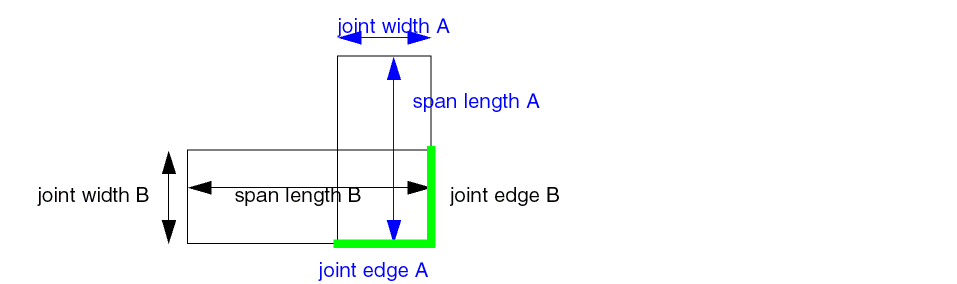
jointWidth(Value, required) specifies that the constraint applies only to joint edges with width less than this parameter value, that are not end-of-line edges with length equal to the wire width. -
spanLength(Value, required) specifies that the constraint applies only to two consecutive joints whose lengths are greater than this parameter value.
Examples
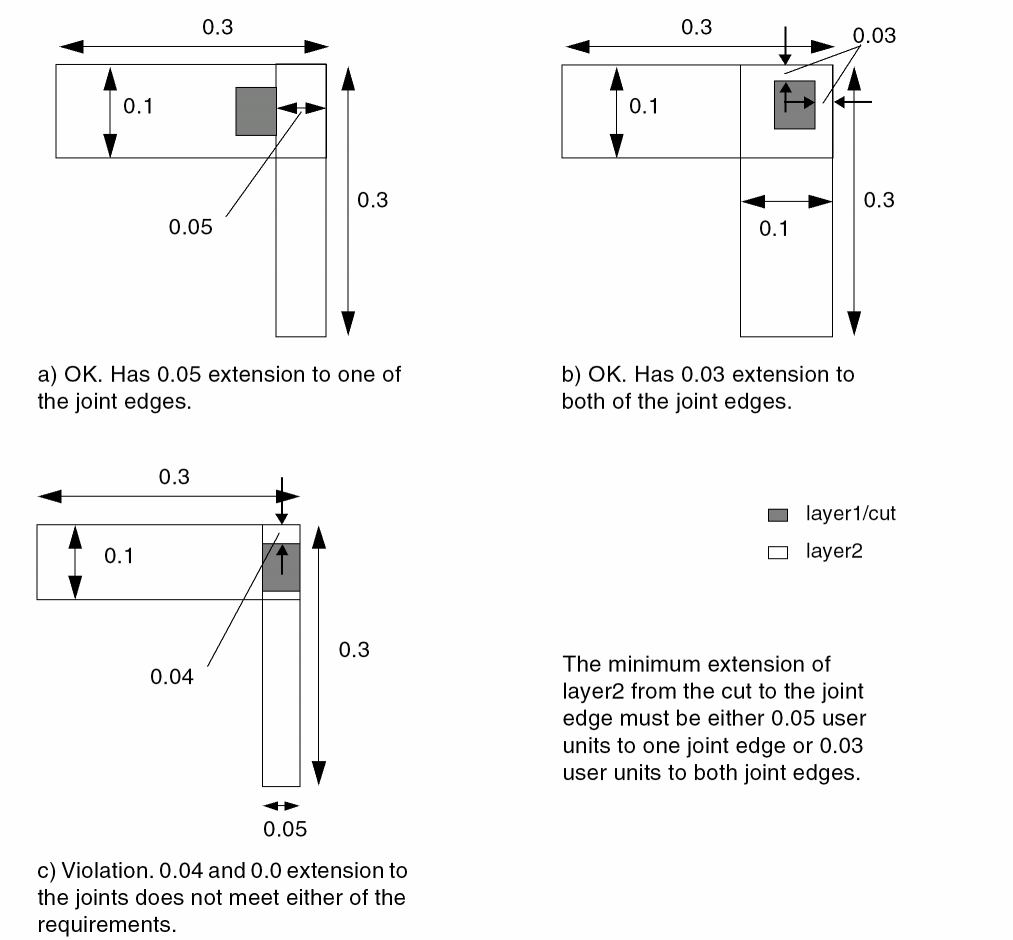
In this example, the minimum extension of Metal1 over V0 must be either 0.05 μm to one joint edge or 0.03 μm to both joint edges for joints with width less than 0.15 μm and span length greater than 0.1 μm.
Related Topics
Return to top