
Defining a One-to-One Device Correspondence
To create a one-to-one device correspondence, you must select only a single schematic device and a single layout device at a time and click Bind. If you select multiple schematic and layout devices and click Bind, Layout XL creates a single many-to-many correspondence and NOT multiple one-to-one bindings.
To define a correspondence between a single schematic instance (or terminal) and a single layout instance (or terminal),
-
From the layout window menu bar, choose Connectivity – Define Device Correspondence.
The Define Device Correspondence form appears.
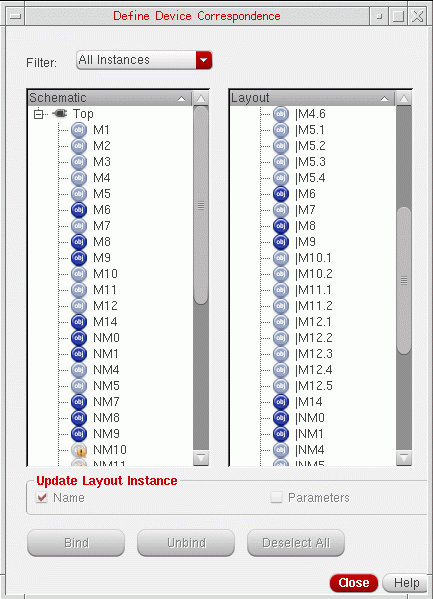
-
Select an unbound instance from the Schematic tree and an unbound instance from the Layout tree.
You can only bind the unbound instances. To only see the unbound instances, choose Unbound Instances from the Filter cyclic field. To see only the unbound terminals, choose Unbound Terminals.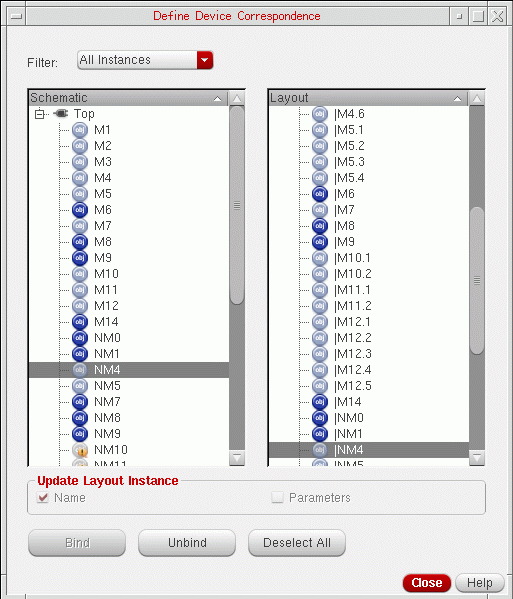
- (Optional) Use the two Update Layout Instance options at the bottom of the form to update the name and parameter values of the layout instance to match those in the schematic instance.
-
Click Bind to create a correspondence between the selected schematic instance and the selected layout instance.
- If the instance masters match, the correspondence is updated and the connectivity from the schematic is propagated to the layout.
- If the instance masters do not match, the Assign layout instance terminals form is displayed. This form lets you assign layout nets to the unbound instance terminals in the selected layout instance.
Showing Best Matches
Use the Show Best Matches command to display only the best matches—the instances that have the correct master—for an unbound schematic or a layout instance. To list the best matches for an unbound schematic or a layout instance:
-
Double-click an unbound instance from the Schematic or Layout tree.
Alternatively, you can right-click the unbound Schematic or Layout instance for which you want to display the best matches and choose the Show Best Matches command from the menu.
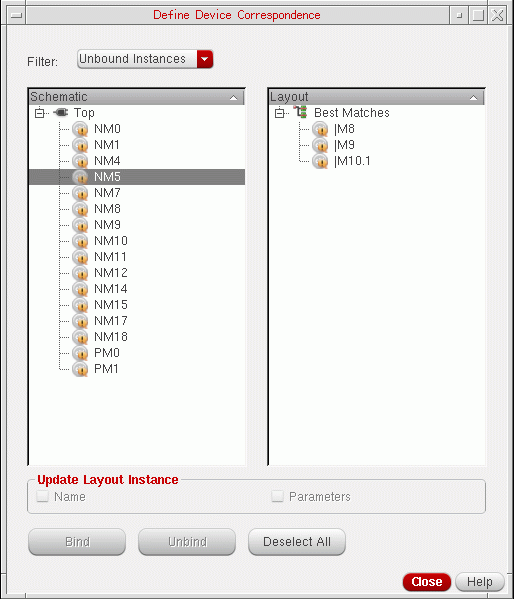
The corresponding best matches for the selected instance are displayed in the other column. For example, if you selected an unbound Schematic instance, such as NM5 in the figure above, its corresponding best matches are displayed in the Layout tree.
You can then select the appropriate best match for defining a one-to-one device correspondence or select appropriate best matches for defining a one-to-many device correspondence.
Related Topics
Define Device Correspondence Form
Assign Layout Instance Terminals Form
Assigning Layout Instance Terminals to Nets
Defining a One-to-One Device Correspondence
Defining a One-to-Many Device Correspondence
Return to top