
Variable-Height and Multiple-Height Cells
Cell heights in your library affect floorplanning and placement. This is shown in the following figure.
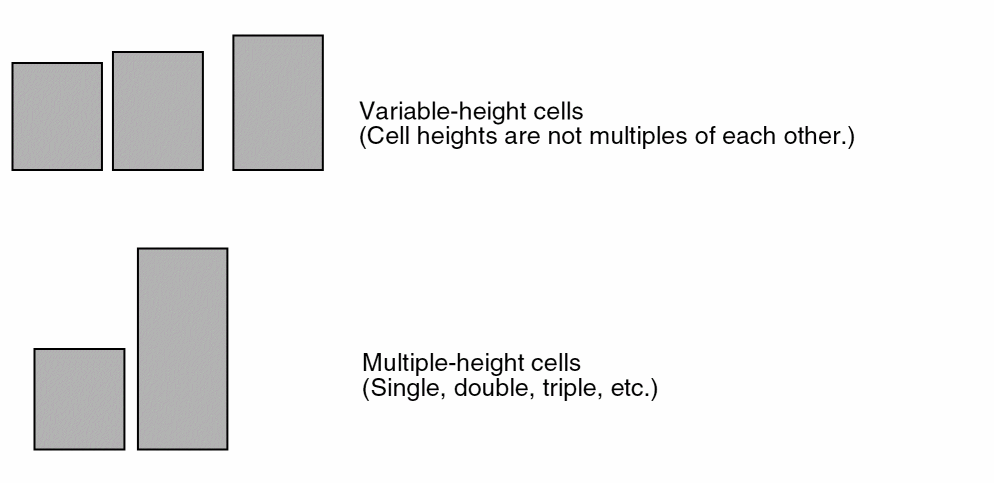
See Variable Height Cells and Multiple Height Cells.
Variable Height Cells
If your design has variable height cells, define only one site type. The following guidelines should be used to assist you.
- The tallest cell’s height should be used to define row (site) height.
- Cells are aligned by the lower left corner.
- Power must abut between all cells in the row.
- Placement space is wasted where short cells are placed.
- Floorplanning the core area is simplified because there is only one type of core row.
In the following figure, the cell heights are not multiples of each other.
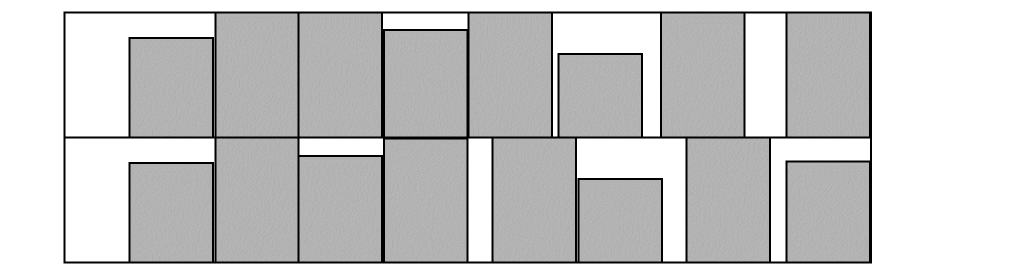
- Floorplanning is simplified because additional row types are not added.
- Placement space is wasted because the rows do not overlap.
- The lower left corner of the non rotated cell’s place-and-route boundary is used as the alignment point.
If cell heights are multiples of each other (single and double height cells, for example), floorplanning is handled differently.
Using the Overlap Layer
You can use the overlap layer to increase placement density and eliminate most of the empty space. The following guidelines should be used to assist you.
- The site for each cell is the same height (use the tallest cell to define the site).
- The overlap layer defines the cell height.
- Empty space above short cells is used by taller cells in the next row.
-
The placer will resolve overlaps as shown.
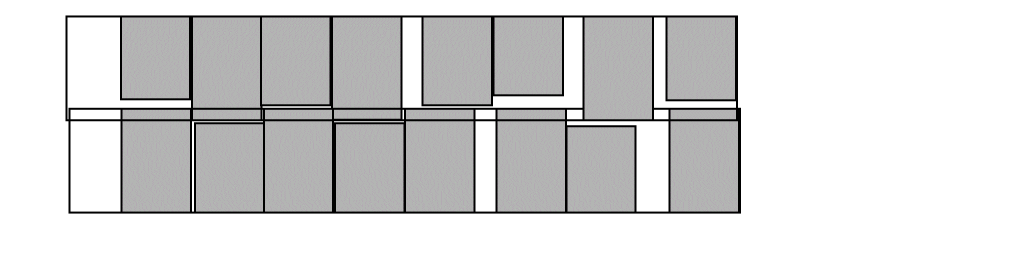
- The cells must have power pins defined so they connect when cells abut.
- If flipping of rows is allowed, you must define power to accommodate this.
Cell rows can overlap where power does not overlap.
Multiple Height Cells
The following guidelines should be used to assist you when using multiple-height cells.
- These cells have a height that is a multiple of the normal cell height.
- Define a site for each cell height.
- Rows can overlap as long as the power rails align.
- A true channel-less library, where no routing channels are needed between core cell rows, provides best placement.
- Advantages
- Disadvantages
If a cell is over twice as high, then it limits routing space between the short rows, based on the large cells abutment.
Currently, Innovus does not report utilization values that take into account overlapping rows.
Related Topics
Guidelines for Setting Cell Porosity and High Density in a Cell Library
Return to top