
minClusterSpacing (One layer)
spacings( ( minClusterSpacingtx_layer'widthRangeg_widthRange'numShapesRangeg_numShapesRange'spacingRangeg_spacingRange['centerLineDistance] ['minSpaceOverride] ['horizontal | 'vertical] ['otherWidthRangeg_otherWidthRange] ['groupHorizontal | 'groupVertical ['enclosingLayertx_enclosingLayer['viaEdgeTypex_edgeType] ] ] ['prlf_prl] ['clusterToCluster] ['edgeToEdge] ['sameMask] ['widthHorizontal | 'widthVertical]f_spacing)
) ;spacings
(Virtuoso Advanced Node for Layout Standard) Specifies the minimum spacing between two neighboring clusters or a cluster and other neighboring shapes that may or may not be part of another cluster, on the same layer. The shapes in a cluster must be exactly aligned and must satisfy all of the following conditions:
- The width of each shape in the cluster must be in the specified width range, widthRange.
- The edge-to-edge spacing or the spacing between the centerlines of neighboring shapes in the cluster must be in the specified spacing range, spacingRange.
- The number of shapes that satisfy the two conditions listed above must be in the specified number range, numShapesRange.
Optionally, each cluster can be aligned either in the vertical direction or in the horizontal direction. The constraint can also be selectively applied to neighboring non-cluster shapes based on their widths.
Values
Parameters
|
The widths of the shapes in a cluster must fall in this range.
Type: Floating-point values specifying a |
|
|
The constraint applies only if the number of shapes in a cluster falls in this range.
Type: Integer values specifying the minimum and maximum number of shapes ( |
|
|
This spacing between the centerlines of the shapes in a cluster must fall in this range.
Type: Floating-point values specifying a |
|
|
The spacing is measured from the centerline of the cluster to centerline of the neighboring non-cluster shapes. |
|
|
The constraint does not apply if the neighboring shape is part of another cluster. |
|
|
The direction in which spacing is measured. If direction is not specified, spacing is measured in any direction. |
|
|
The constraint applies to a non-cluster shape only if its width falls in this range.
Type: Floating-point values specifying a |
|
|
The constraint applies only if a cluster is formed in the specified direction. If the direction is not specified, the cluster can be formed in either direction. |
|
|
(Virtuoso Layout Suite EXL and higher tiers) The constraint applies only for the specified group direction for shapes enclosed by this layer. |
|
|
(Virtuoso Layout Suite EXL and higher tiers) The constraint applies only when all via edges in the direction orthogonal to the group direction and in the enclosing layer are of this type. The type is defined in the |
|
|
The constraint applies only if the parallel run length between the shapes in a cluster and a neighboring non-cluster shape is greater than or equal to this value. |
|
|
(Virtuoso Advanced Node for Layout Only) The constraint applies only between neighboring clusters. Otherwise, the constraint also applies between a cluster and neighboring non-cluster shapes. |
|
|
(Virtuoso Advanced Node for Layout Only) The spacing between neighboring shapes in a cluster is measured edge-to-edge. Otherwise, the spacing is measured between centerlines. |
|
|
(Virtuoso Advanced Node for Layout Only) Clusters are formed between shapes of the same color. Moreover, the constraint applies to neighboring non-cluster shapes only if they are of the same color as the shapes that form the cluster. |
|
|
(Virtuoso Advanced Node for Layout Only) The direction in which the
By default, when this parameter is not used, the smaller dimension is used for |
|
Examples
- Example 1: minClusterSpacing with widthRange, numShapesRange, spacingRange, and otherWidthRange
- Example 2: minClusterSpacing with widthRange, numShapesRange, spacingRange, centerLineDistance, and otherWidthRange
- Example 3: minClusterSpacing with widthRange, numShapesRange, spacingRange, centerLineDistance, otherWidthRange, and groupVertical
- Example 4: minClusterSpacing with widthRange, numShapesRange, spacingRange, horizontal, otherWidthRange, and groupVertical
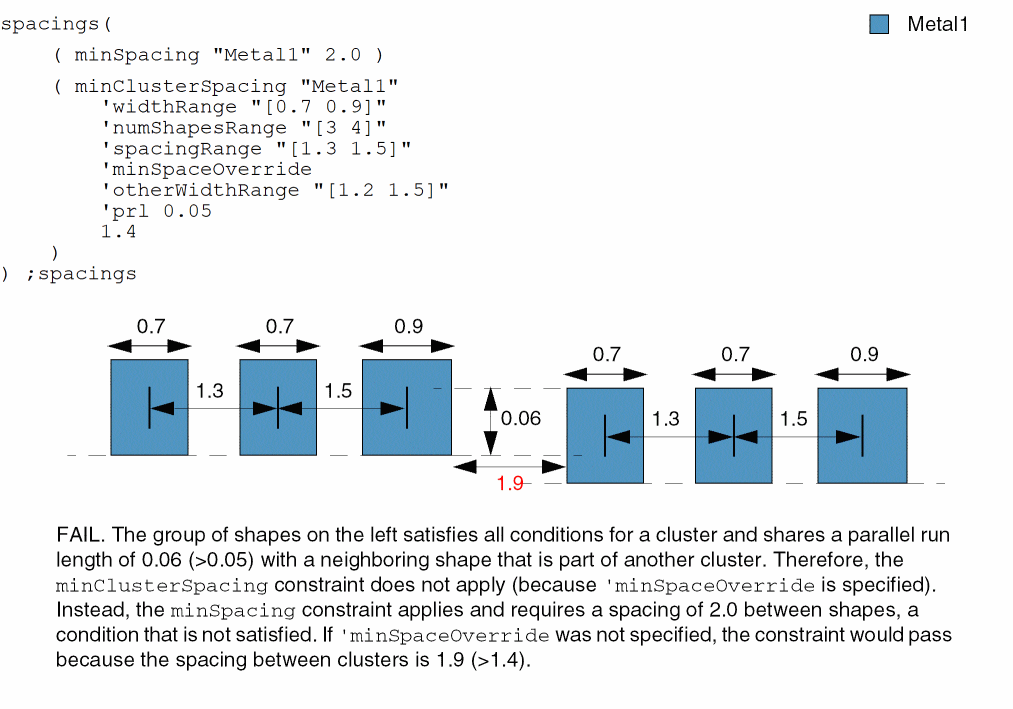
- Example 5: minClusterSpacing with widthRange, numShapesRange, spacingRange, minSpaceOverride, otherWidthRange, and prl
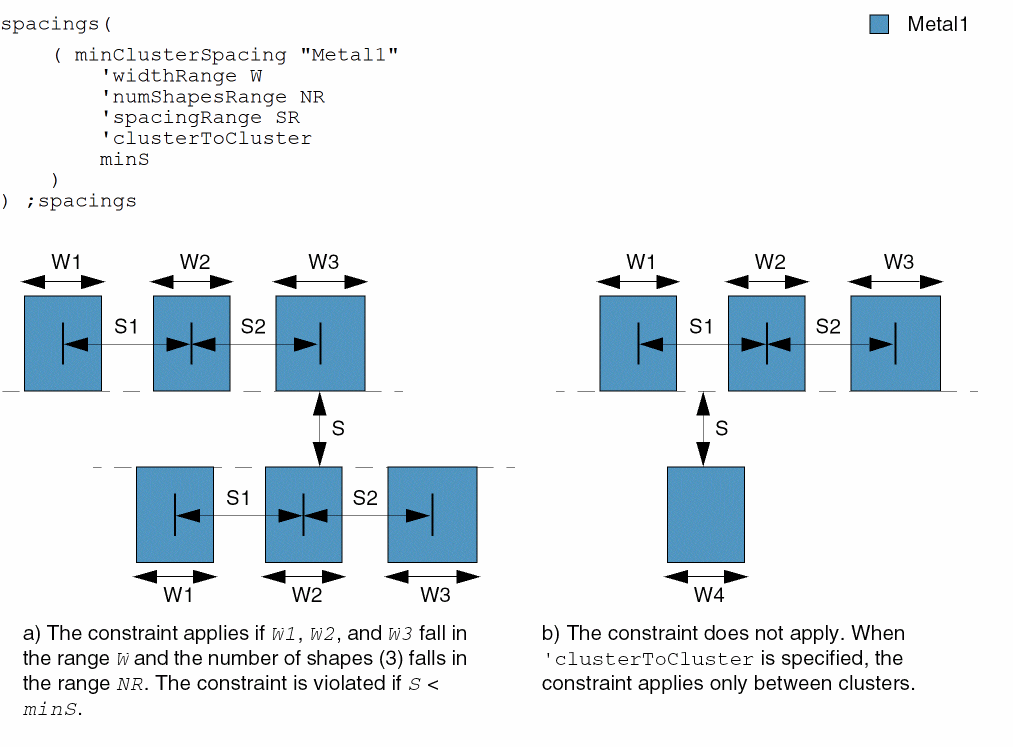
- Example 6: minClusterSpacing with widthRange, numShapesRange, spacingRange, and clusterToCluster
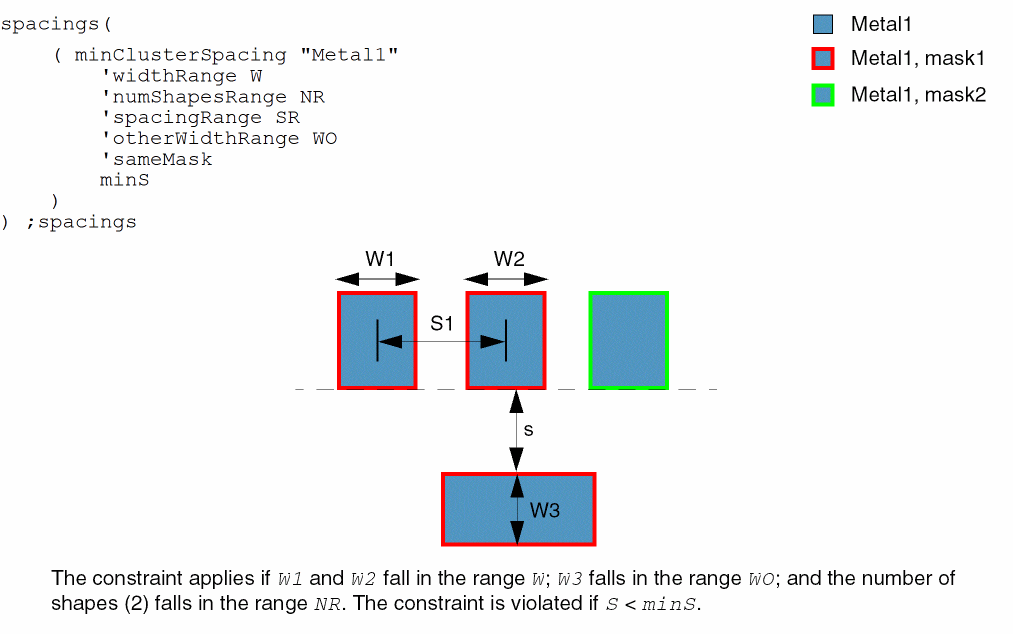
- Example 7: minClusterSpacing with widthRange, numShapesRange, spacingRange, otherWidthRange, and sameMask
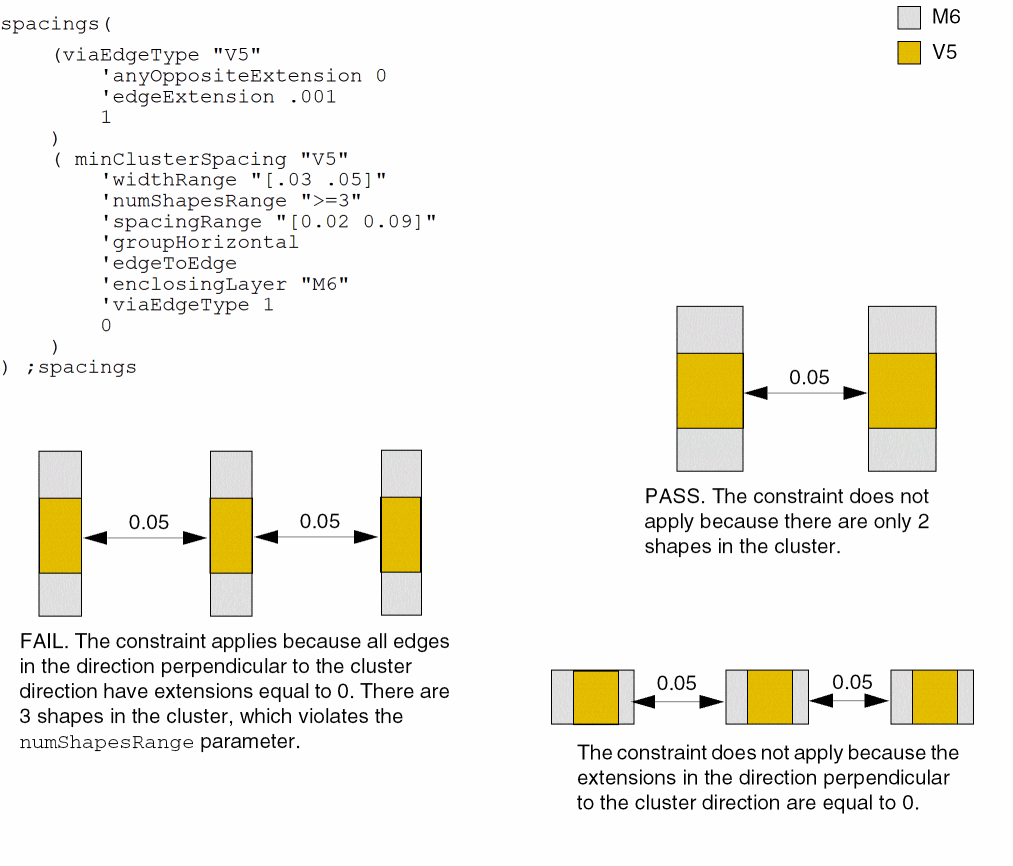
- Example 8: minClusterSpacing with group direction, enclosingLayer, and viaEdgeType
Example 1: minClusterSpacing with widthRange, numShapesRange, spacingRange, and otherWidthRange
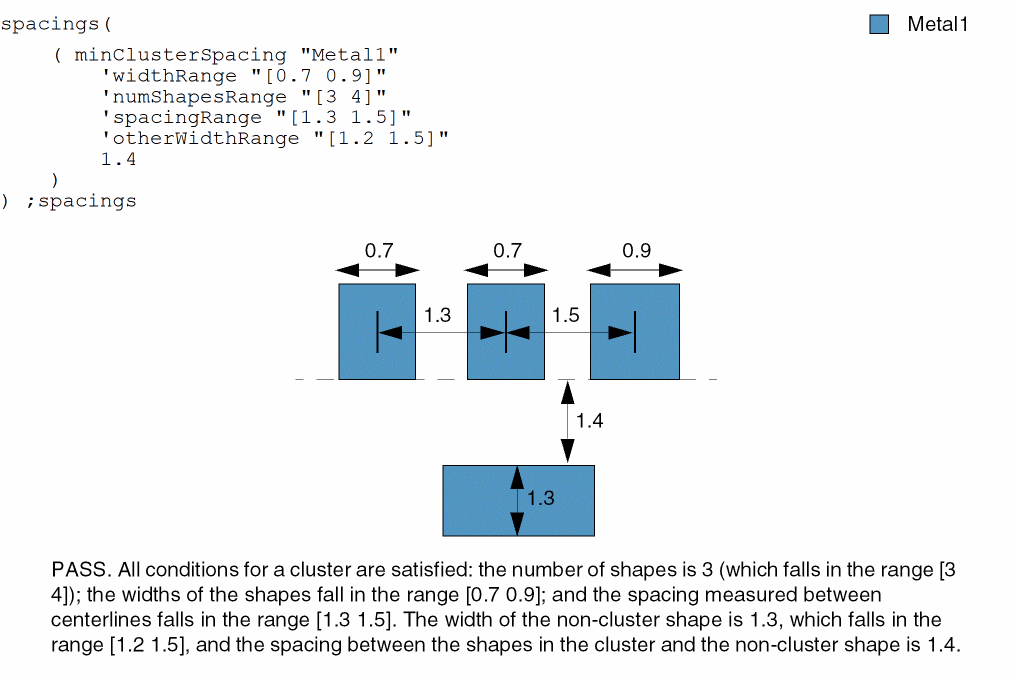
The spacing between a cluster and a neighboring shape must be at least 1.4 if the width of the neighboring shape is greater than or equal to 1.2 and less than or equal to 1.5.
The shapes in the cluster must satisfy the following conditions:
- The width of each shape in the cluster must be in the range [0.7 0.9].
- The number of shapes in the cluster must be at least 3 and at most 4.
-
The spacing measured between the centerlines of neighboring shapes in the cluster must be in the range [1.3 1.5].
Example 2: minClusterSpacing with widthRange, numShapesRange, spacingRange, centerLineDistance, and otherWidthRange
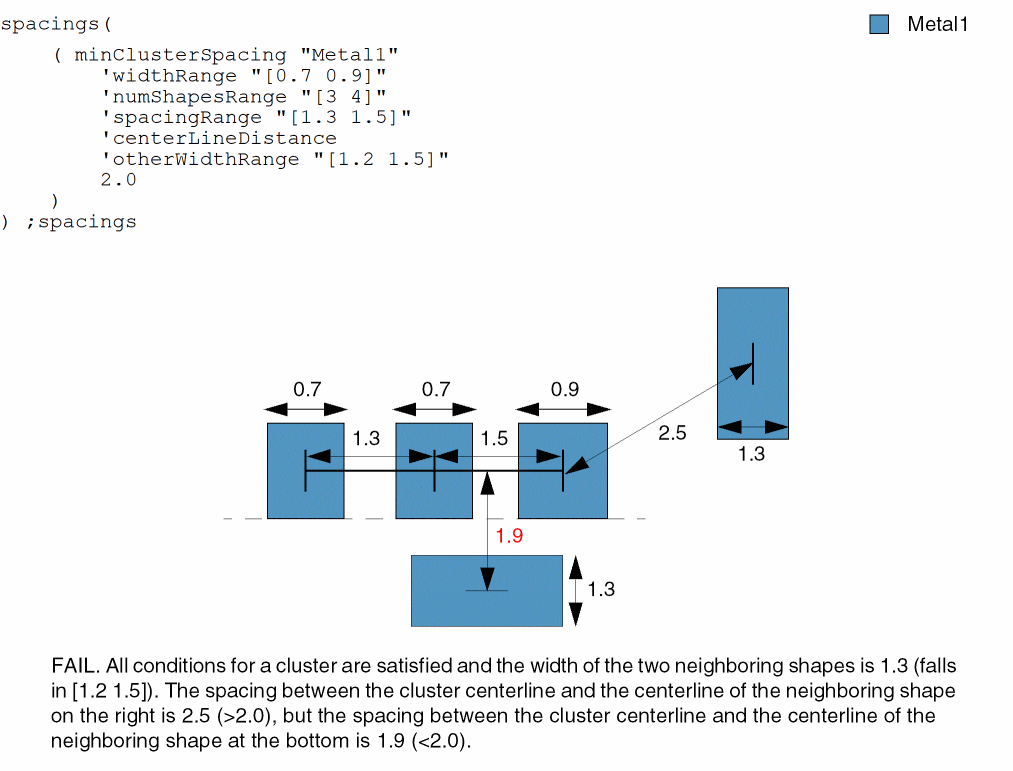
The spacing measured from the centerline of a cluster to the centerline of a neighboring shape must be at least 2.0 if the width of the neighboring shape is greater than or equal to 1.2 and less than or equal to 1.5.
The shapes in the cluster must satisfy the following conditions:
- The width of each shape in the cluster must be in the range [0.7 0.9].
- The number of shapes in the cluster must be at least 3 and at most 4.
-
The spacing measured between the centerlines of neighboring shapes in the cluster must be in the range [1.3 1.5].
Example 3: minClusterSpacing with widthRange, numShapesRange, spacingRange, centerLineDistance, otherWidthRange, and groupVertical
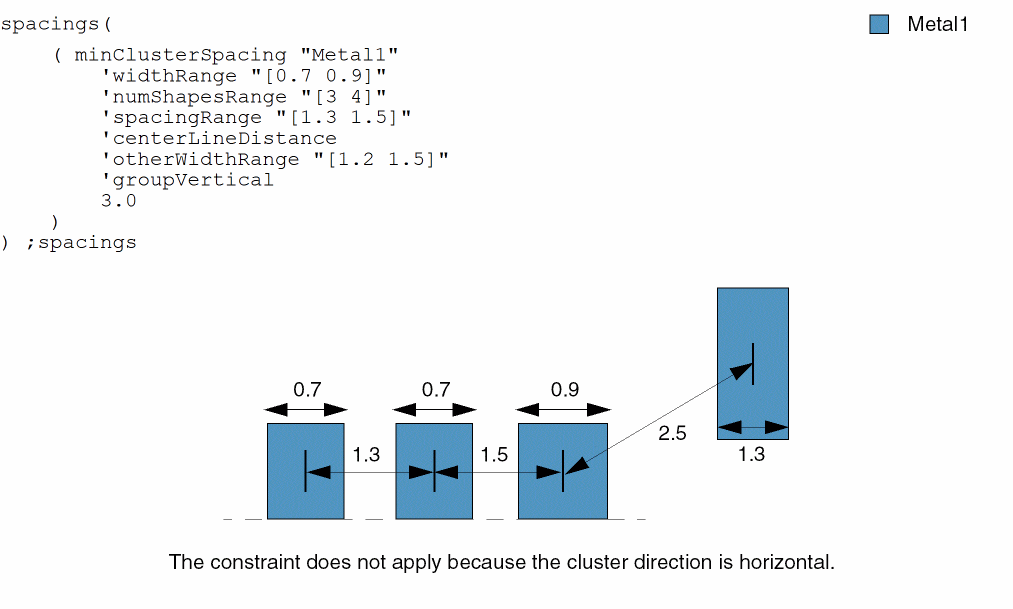
The spacing measured from the centerline of a vertical cluster to the centerline of a neighboring shape must be at least 2.0 if the width of the neighboring shape is greater than or equal to 1.2 and less than or equal to 1.5.
The shapes in the cluster must satisfy the following conditions:
- The width of each shape in the cluster must be in the range [0.7 0.9].
- The number of shapes in the cluster must be at least 3 and at most 4.
-
The spacing measured between the centerlines of neighboring shapes in the cluster must be in the range [1.3 1.5].
Example 4: minClusterSpacing with widthRange, numShapesRange, spacingRange, horizontal, otherWidthRange, and groupVertical
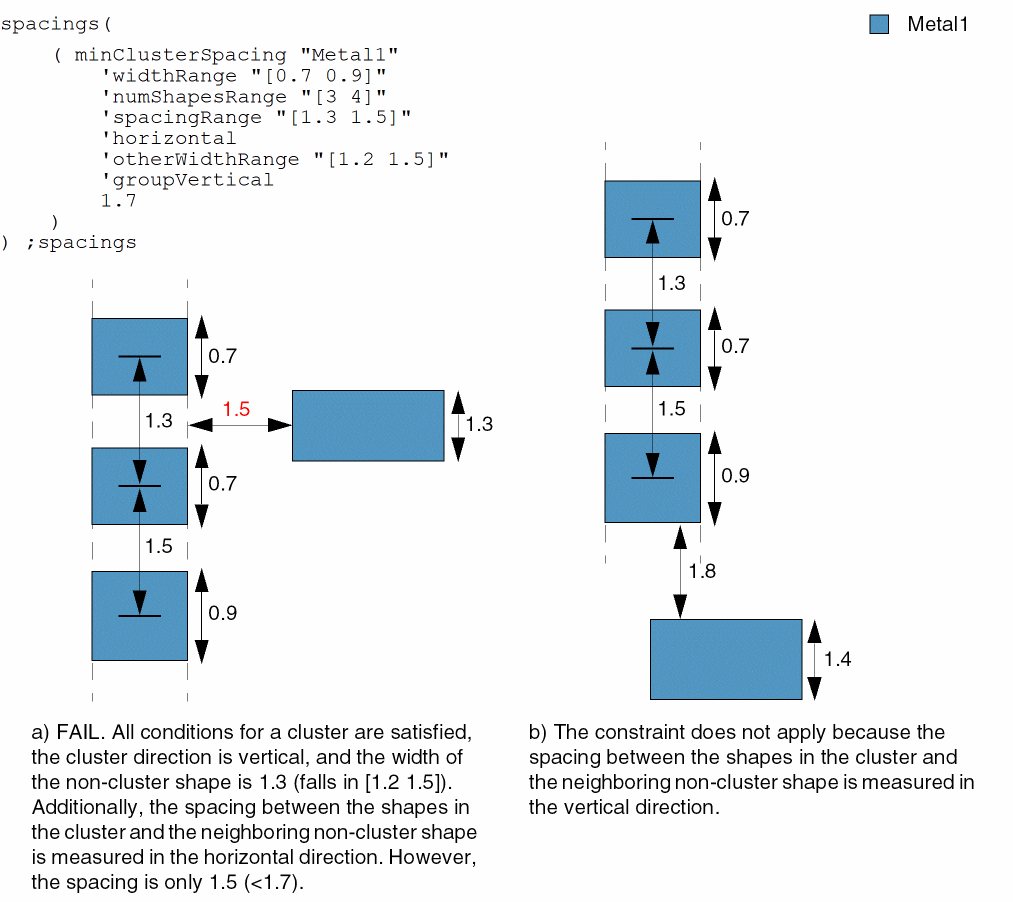
The horizontal spacing between a vertical cluster and a neighboring shape must be at least 1.7 if the width of the neighboring shape is greater than or equal to 1.2 and less than or equal to 1.5. The shapes in the cluster must satisfy the following conditions:
- The width of each shape in the cluster must be in the range [0.7 0.9].
- The number of shapes in the cluster must be at least 3 and at most 4.
-
The spacing measured between the centerlines of neighboring shapes in the cluster must be in the range [1.3 1.5].
Example 5: minClusterSpacing with widthRange, numShapesRange, spacingRange, minSpaceOverride, otherWidthRange, and prl
The spacing between a cluster and a neighboring shape must be at least 1.4 if the width of the neighboring shape is greater than or equal to 1.2 and less than or equal to 1.5 and the common parallel run length is greater than or equal to 0.05.
The shapes in the cluster must satisfy the following conditions:
- The width of each shape in the cluster must be in the range [0.7 0.9].
- The number of shapes in the cluster must be at least 3 and at most 4.
- The spacing measured between the centerlines of neighboring shapes in the cluster must be in the range [1.3 1.5].
If the neighboring shape belongs to a cluster, a minimum spacing requirement of 2.0 must be satisfied.
Example 6: minClusterSpacing with widthRange, numShapesRange, spacingRange, and clusterToCluster
The spacing between two clusters must be at least minS if the shapes in both clusters satisfy the following conditions:
- The width of each shape in both clusters is in the range W.
- The number of shapes in both clusters is in the range NR.
-
The spacing measured between the centerlines of neighboring shapes in both clusters is in the range SR.
Example 7: minClusterSpacing with widthRange, numShapesRange, spacingRange, otherWidthRange, and sameMask
The spacing between a cluster of shapes on mask1 and a neighboring mask1 shape must be at least minS if the width of the neighboring shape falls in the range WO.
The shapes in the cluster must satisfy the following conditions:
- The width of each shape in the cluster must be in the range W.
- The number of shapes in the cluster must be in the range NR.
-
The spacing measured between the centerlines of neighboring shapes in the cluster must be in the range SR.
Example 8: minClusterSpacing with group direction, enclosingLayer, and viaEdgeType
The spacing between a cluster of shapes on mask1 and a neighboring mask1 shape must be as defined in the constraint. There must be only two self-aligned vias with self-aligned edges facing each other within a distance of 0.04 to 0.108.
Return to top