
rdeCreateChamferFill
rdeCreateChamferFill(
[ ?all { t | nil } ]
[ ?cv d_cvid ]
[ ?region l_region ]
[ ?layer lt_layer ]
[ ?lengthThreshold f_length ]
[ ?chamferValue1 {f_value1 | l_chamfer1} ]
[ ?chamferValue2 {f_value2 | l_chamfer2} ]
[ ?extendViaChamfer { t | nil } ]
[ ?allowViolation { t | nil } ]
[ ?outputPurpose t_purposeName ]
[ ?materialRemovalPurpose t_purposeName ]
[ ?chamferFilter l_filterCriteria ]
[ ?useEdgeLength { t | nil } ]
)
=> t / nil
Description
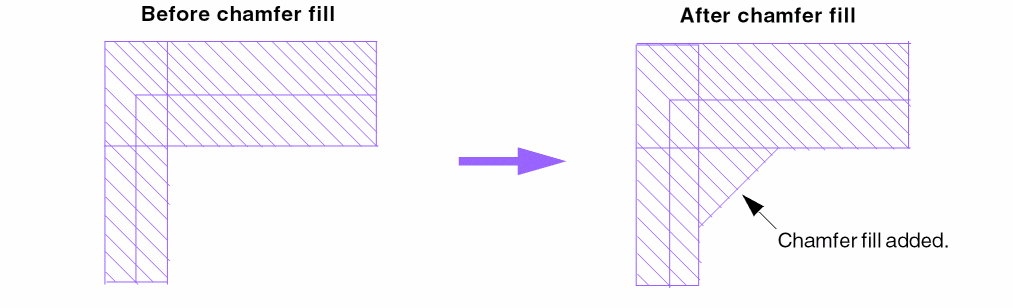
Creates chamfer fill on wires (pathSegs). The chamfer fill mechanism removes 90-degree corners by filling the corners of wires that form T-junctions, L-shaped wires, wire-to-via, wire-to-rectangle, and wire-to-polygon connections. T-junctions and L shapes created using only rectangles or polygons are not considered for chamfer fill.
An example of a chamfer fill shape on an L-shaped wire is shown in the following figure.
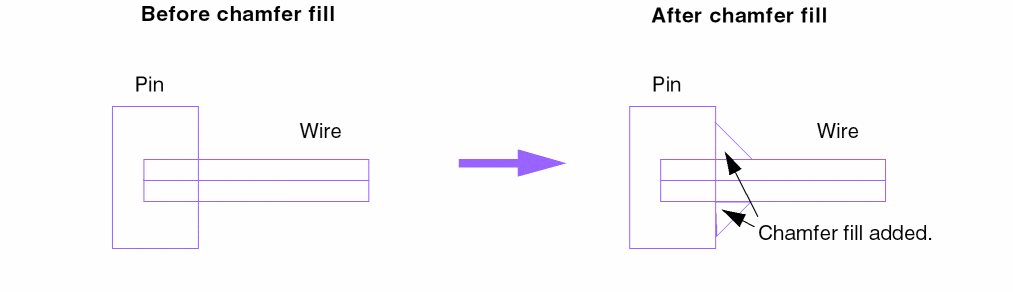
An example of chamfer fill for a wire that connects to a pin (rectangle) is shown in the following figure.
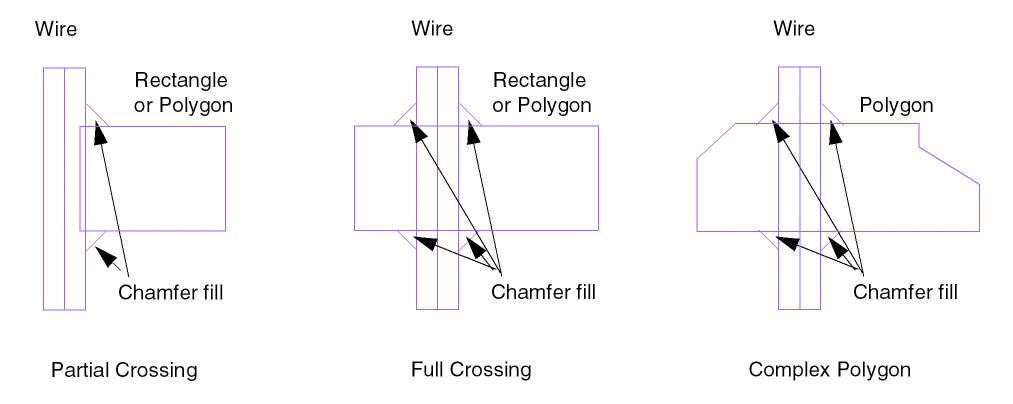
The following figure shows examples of chamfer fill shapes added at the intersections of wires and rectangles or polygons.
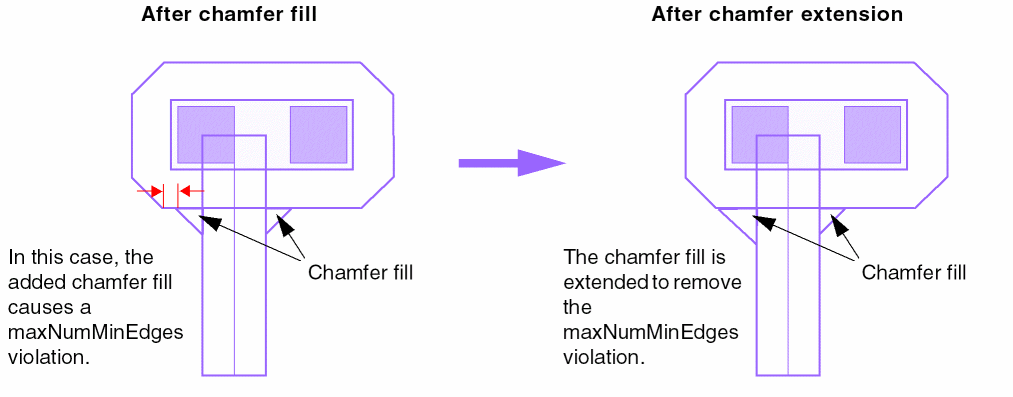
If the added chamfer fill at a via junction causes a maxNumMinEdges violation, then the chamfer fill edges are extended to fix the violation, as shown in the following figure.
Arguments
|
If set to |
|
|
Database ID of the cellview. Default is the current active window. |
|
|
Creates chamfer fill on the wires in the specified region. Specify the region using a list containing a pair of XY coordinates defining the lower-left and upper-right corners of a rectangle in the following format: |
|
|
Creates chamfer fill on only the layers in the list. By default, chamfer fill is created on all the routing layers. |
|
|
Specifies the threshold that determines whether
If |
|
|
Specifies the chamfer value to be applied if |
|
|
Specifies the chamfer value to be applied if |
|
|
Adds chamfer fill on wire-to-via junctions. The default is |
|
|
Adds chamfer fill even if it causes design rule violations. The default is |
|
|
Specifies the layer purpose on which added chamfer fill shapes are drawn. If |
|
|
Specifies the layer purpose on which wire removal shapes are drawn when chamfering the external corners of L-shaped wires. The removal shape is drawn on the specified purpose on the same layer as the wire and is processed when exporting GDSII or during fracturing. See Example 3—Chamfering external corners of L-shaped wires for more information. |
|
|
Filters the wires on which chamfer fill is created, based on a list of specified criteria. For example:
|
|
|
Computes the length on the external edges of the wire. The default is |
|
Value Returned
Examples
Example 1—Chamfer fill where lengthThreshold is not considered
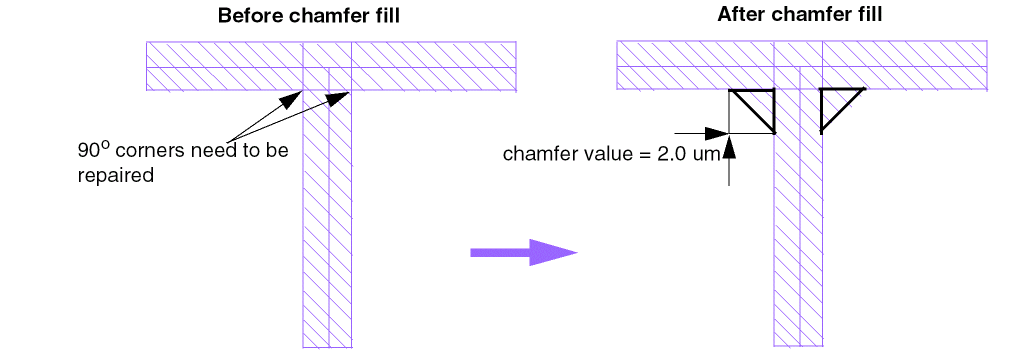
rdeCreateChamferFill(?all t ?lengthThreshold 0.0 ?chamferValue1 2.0 ?chamferValue2 2.0)
Creates chamfer fill of 2 microns on all the 90-degree corners of all the wires on all the routing layers. In this scenario, the lengthThreshold value (0 microns) is not considered. The following figure illustrates this example with a T-junction wire; chamfer fill of 2 microns is created on both the sides of the T-junction.
Example 2—Chamfer fill where lengthThreshold is considered
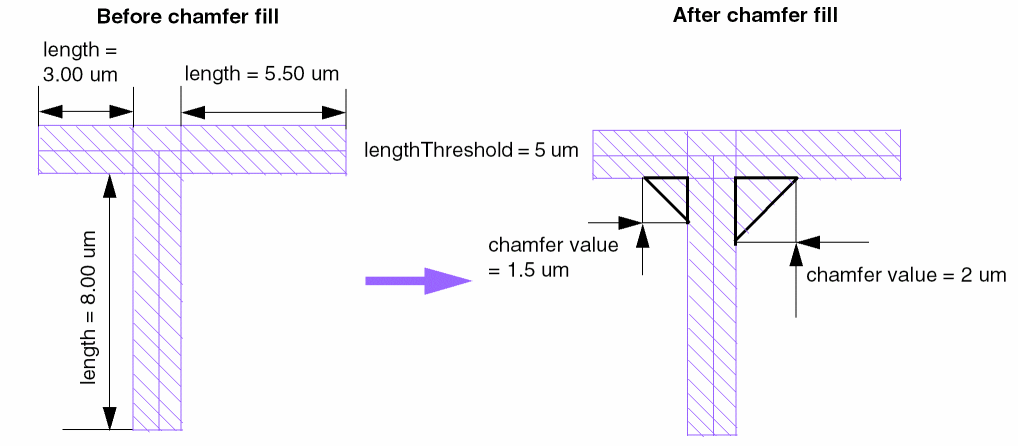
rdeCreateChamferFill(?all t ?layer '("M2"} ?lengthThreshold 5.0 ?chamferValue1 1.5 ?chamferValue2 2.0)
Creates chamfer fill on all the 90-degree corners of all the wires on the M2 layer according to the following conditions:
-
If the length of one segment is less than the
lengthThresholdvalue (5 microns), the chamfer fill value will be 1.5 microns. -
If the length of both the segments is greater than or equal to the
lengthThresholdvalue (5 microns), the chamfer fill value will be 2 microns.
The following figure illustrates this example with a T-junction wire. The lengths of the segments for the left corner are 3 and 8 microns, so its chamfer fill value is 1.5 microns. The lengths of the segments for the right corner are 5.5 and 8 microns, so its chamfer fill value is 2 microns.
Example 3—Chamfering external corners of L-shaped wires
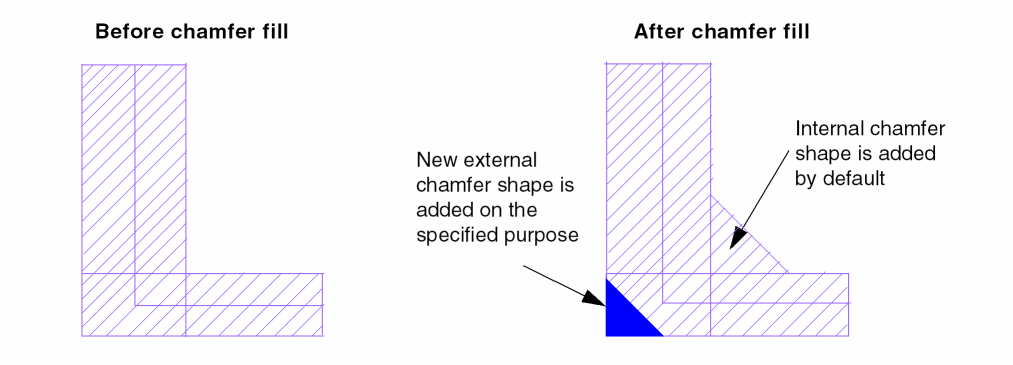
rdeCreateChamferFill(?all t ?layer '("M2"} ?materialRemovalPurpose "noDrawing"
The following figure illustrates the effect of specifying the ?materialRemovalPurpose argument, which specifies the layer purpose on which chamfer removal shapes are drawn on the external corners of wires.
Related Topics
Return to top