
BSIM-CMG Model Equations
Bias Independent Calculations
Physical constants
Physical quantities in BSIM-CMG are in M.K.S units unless specified otherwise.









Effective Channel Width, Channel Length and Fin Number




If BULKMOD=1 and CAPMOD=1 then











Quantum Mechanical Effects
The following bias-independent calculations are for the threshold voltage shift and bias dependence of inversion charge centroid due to quantum mechanical confinement.








Binning Calculations
For given L and NFIN, each model parameter PARAMi is calculated as a function of PARAM, a length dependent term, LPARAM, a number of fin per finger(NFIN) dependent term, NPARAM, product L x NFIN term, and PPARAM:

Terminal Voltages
Terminal Voltages and Vdsx Calculation





Short Channel Effects
Weighting Function for Forward and Reverse Mode










All above PARAMa=PARAM and reverse mode parameter PAPAMR are ignored.
Vt Roll-off, DIBL, and Subthreshold Slope Degradation





Surface Potential Calculation
Surface potentials at the source and drain ends are derived from the Poisson's equation with a perturbation method and computed using the Householder's cubic iteration method. Perturbation allows accurate modeling of finite body doping.
When the body is lightly-doped, a simplified surface potential algorithm can be activated by setting COREMOD=1 to enhance computational efficiency.
Drain Saturation Voltage
Electric Field Calculations
If GEOMOD is not equal to 3 then

Drain Saturation Voltage (Vdsat) Calculations
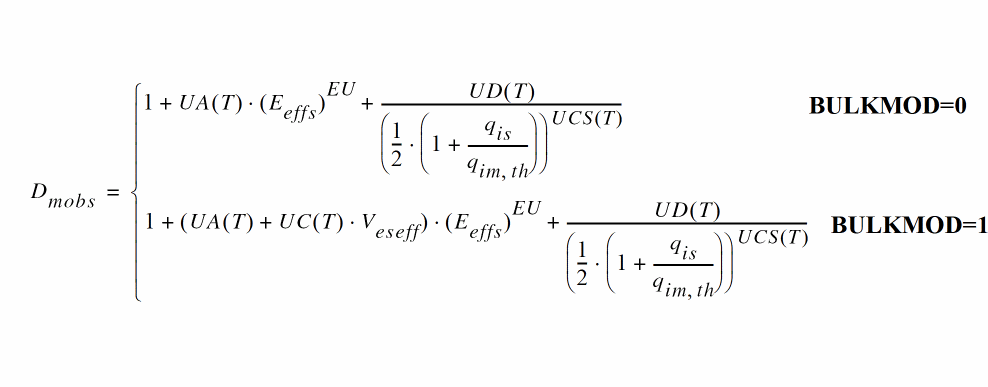












Average Potential and Charge


If GEOMOD is not equal to 3 then




Quantum Mechanical Effects
Charge Centroid Calculation



Effective Width Model





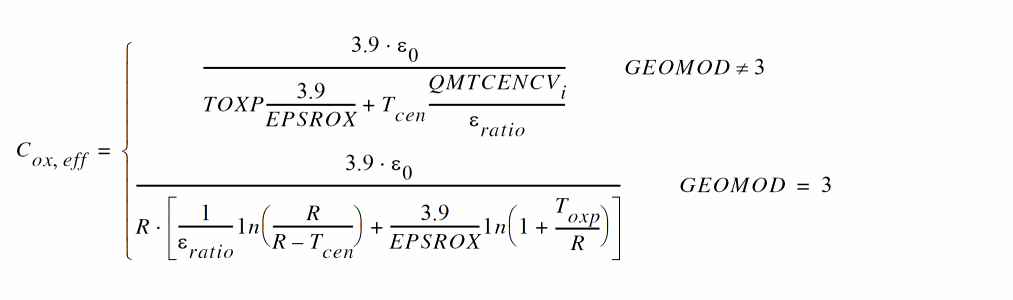
Effective Oxide Thickness/Effective Capacitance
If QMTCENCVi is not equal to 0 then
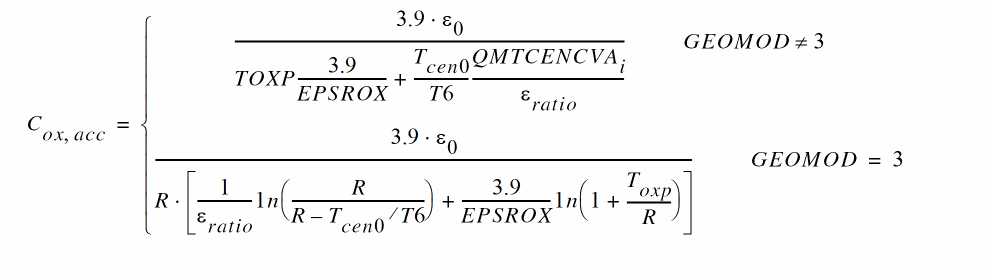
Charge Centroid Calculation for Accumulation


Mobility Degradation and Series Resistance
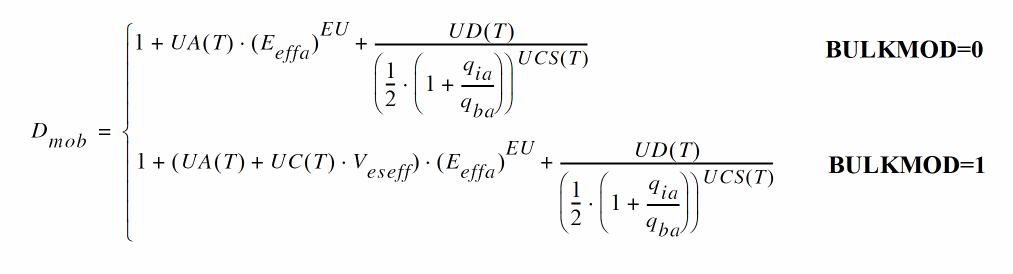
Mobility Degradation



Lateral Non-uniform Doping Model

Body Effect Model




Output Conductance
Channel Length Modulation


Output Conductance due to DBL
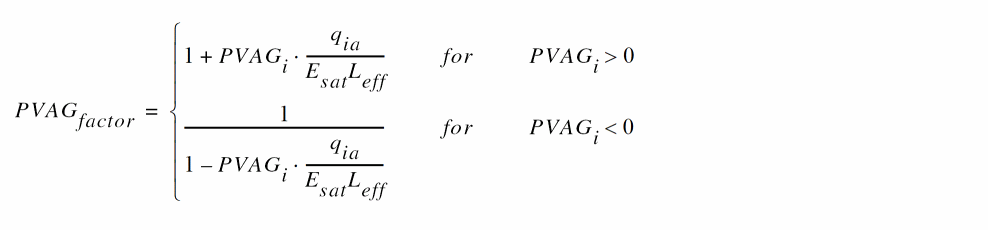



Velocity Saturation
Current Degradation Due to Velocity Saturation


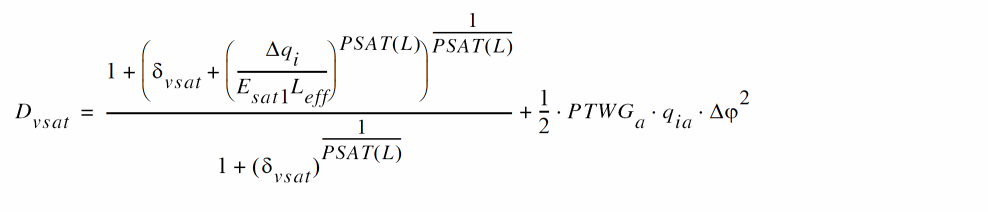
Non-Saturation Effect



Drain Current Model

Intrinsic Capacitance Model
Channel Length Modulation


Intrinsic (Normalized) Charge


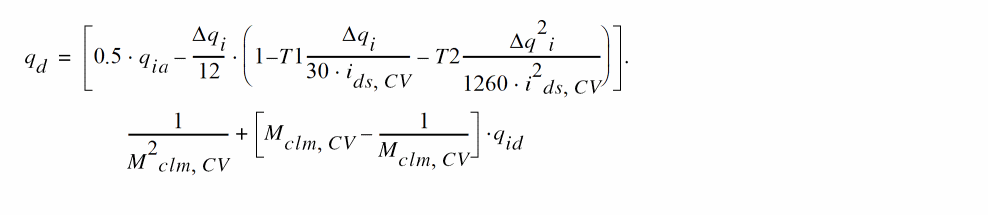
Accumulation Charge

Terminal Charges


Terminal Charges






Parasitic resistances and capacitance models
BSIM-CMG models the parasitic source/drain resistance in two components: a bias dependent extension resistance and a bias independent diffusion resistance. Parasitic gate resistance is modeled as well.






Rs,geo and Rd,geo are the source and drain diffusion resistances, described as follows:
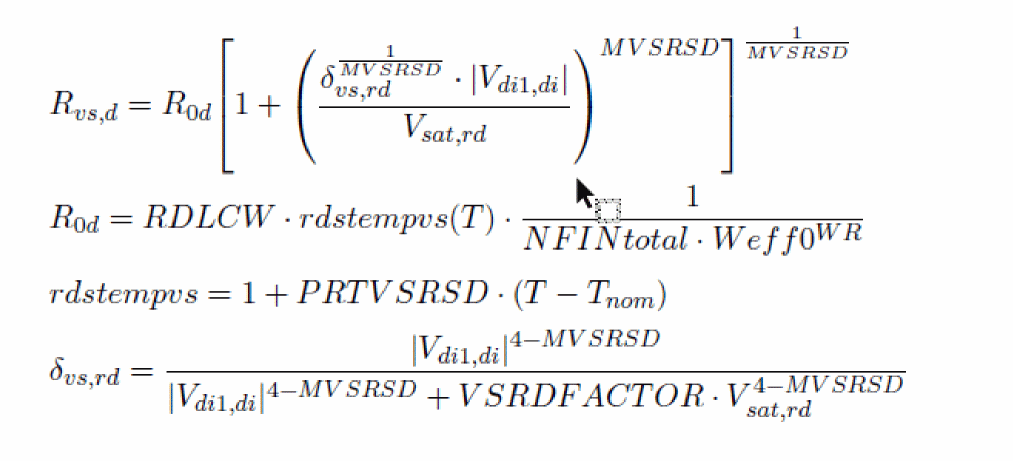
Velocity saturation effect in drain/source resistances
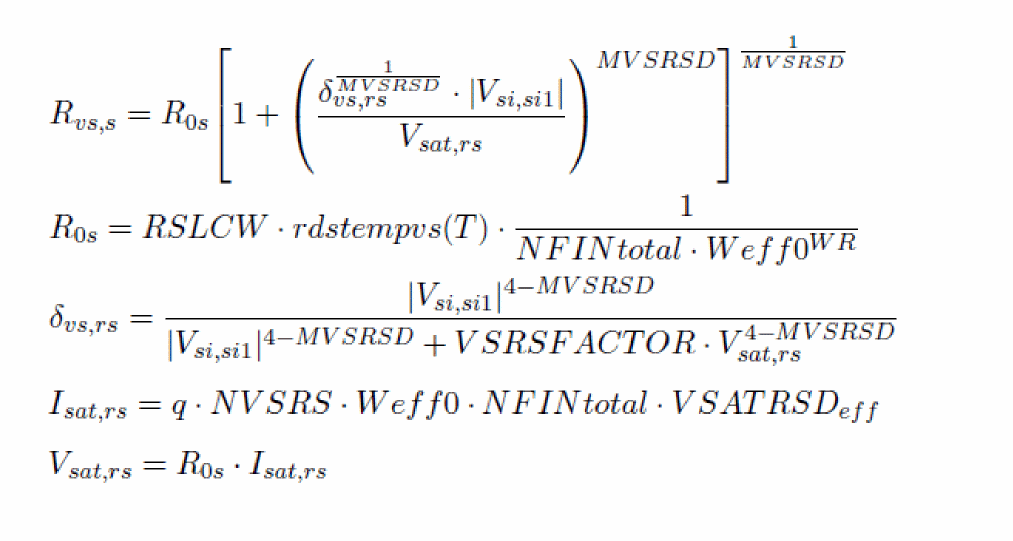
This model only works for RDSMOD = 1. At high current levels, the charge carriers in drain/source resistances may undergo velocity saturation. To this end, two resistances Rvs;d and Rvs;s are added at the drain and source sides, and expressed as follows.
Sheet Resistance Model
RGEOMOD = 0 (sheet resistance model)


Diffusion Resistance Model for Variability Modeling

Gate Electrode Resistance Model

Bias-dependent Overlap Capacitance Model
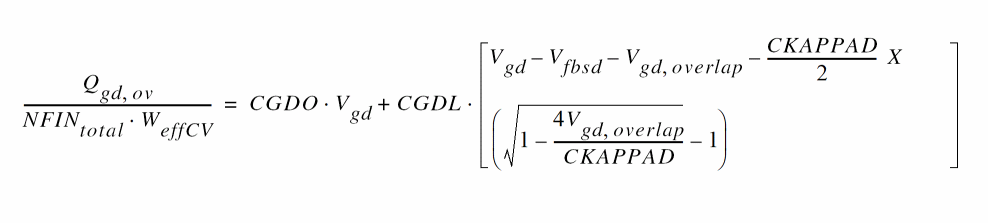
The bias-dependent overlap capacitance model in BSIM-CMG is adopted from BSIM4 for CGEOMOD = 0 and CGEOMOD = 2. The overlap charge is given by:

Substrate Parasitics




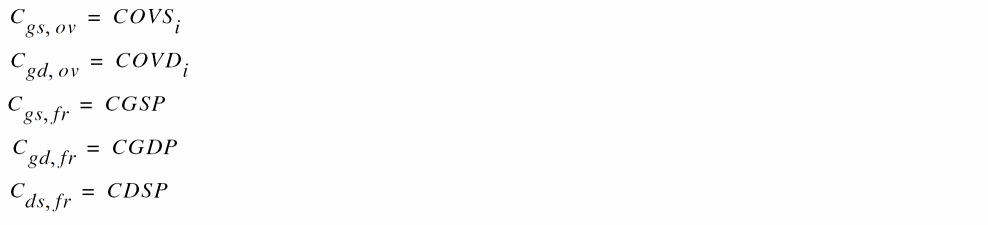
Fringe Capacitances and Capacitance Model Selectors


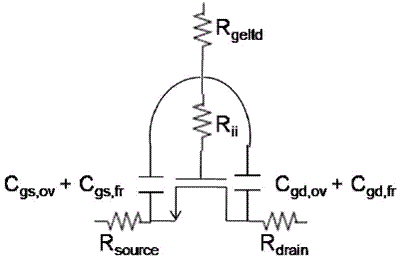
R-C network for CGEOMOD=0, NQSMOD=1, RGATEMOD=1 and RDSMOD=1.
If NQSMOD, RGATEMOD or RDSMOD is 0, then the corresponding resistances become 0 and the nodes collapse.
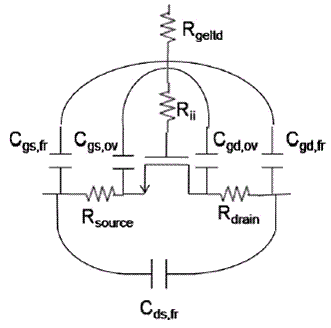
R-C network for CGEOMOD=1, NQSMOD=1, RGATEMOD=1 andRDSMOD=1.
If NQSMOD, RGATEMOD or RDSMOD is 0, then the corresponding resistances become 0 and the nodes collapse.






Impact Ionization and GIDL/GISL Model
Impact Ionization Current
Iii can be switched off by setting IIMOD = 0


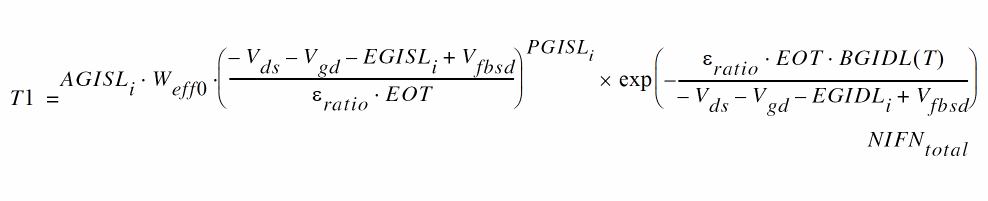
Gate-Induced-Drain/Source-Leakage Current
GIDL/GISL are calculated only for GIDLMOD = 1



Gate Tunneling Current
Gate to body current Igbinv and Igbacc is calculated only if IGBMOD = 1


Gate to channel current Igc is calculated only for IGCMOD = 1.



Gate to source/drain current Igs, Igd are calculated only for IGCMOD = 1



Non Quasi-static Models
This version offers three different non quasi-static (NQS) models. Each of these can be turned on/off using the NQSMOD switch. Setting NQSMOD = 0 turns off all NQS models and switches to plain quasi-static calculations.
Gate Resistance Model (NQSMOD = 1)


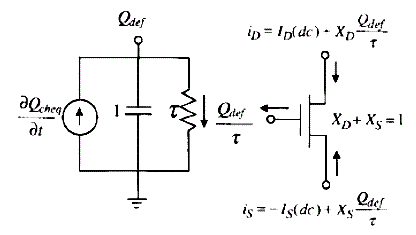
R-C network for calculating deficient charge Qdef and the instantaneous charge,
Qdef / is used in place of the quasi-static charges.
Charge Deficit Model (NQSMOD = 2)




Charge Segmentation Model (NQSMOD = 3)
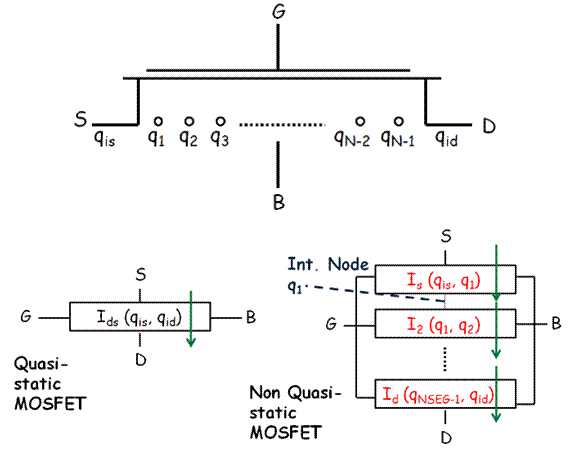
A N-segment charge-segmented MOSFET with N-1 internal nodes.
Generation-recombination Component

Junction Current and Capacitances
The junction current and capacitances are only calculated for bulk multi-gate devices (BULKMOD = 1).
Self-heating Model
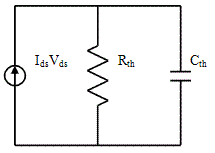
Thermal resistance and capacitance calculations:


Noise Models
Noise models in BSIM-CMG are based on BSIM4. The following table lists the origin of each noise model:
| Model in BSIM-CMG105.0 alpha | Origin |
|---|---|
Flicker Noise Model



Thermal noise model (TNOIMOD = 0)

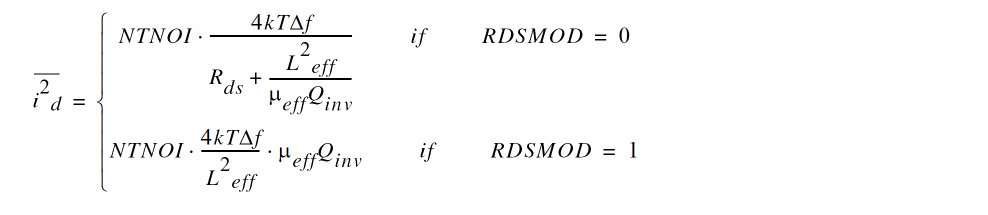
Gate Current Shot Noise

Resistor Noise
The noise associated with each parasitic resistors in BSIM-CMG is calculated.



Return to top