
Stacked Modules
A stacked module is a circuit that is integrated vertically with two or more dies that are stacked, aligned, and bonded using bumps. In conventional ICs, dies are connected using bumps or bonding pads on one side of the chip. In stacked modules, re-distributed layers (RDLs) are generated at the back of the chip. Bumps can be placed on both sides of the chip. Through-silicon vias (TSVs), through-package vias (TPVs), bumps, and silicon interposers help establish interconnections between dies.
The following diagram depicts a stacked module.
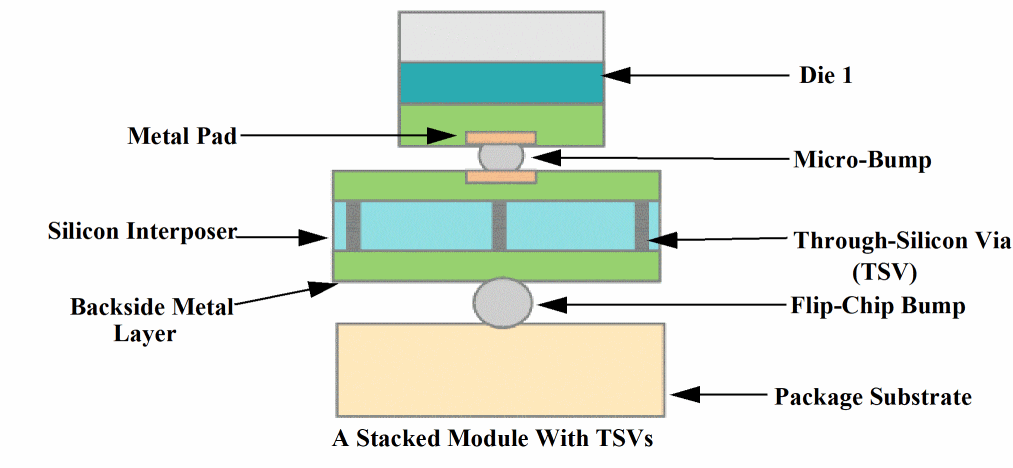
In stacked modules, dies can be stacked to create several tiers, with multiple dies on each tier. Each die can be flipped or rotated in the package.
Virtuoso Stacked Silicon solution enables you to specify the die configuration, interconnection between dies, and the relative positions of dies. You can also manipulate TSVs and bumps and synchronously edit dies.
Return to top