
minOppositeSpanSpacing
Specifies the spacing for a wire that has two neighboring shapes on opposite edges with a projected parallel run length greater than zero. Only neighbor wires that are classified as either ends or a joints are considered and the constraint applies only when the middle wire width is less than a specified width.
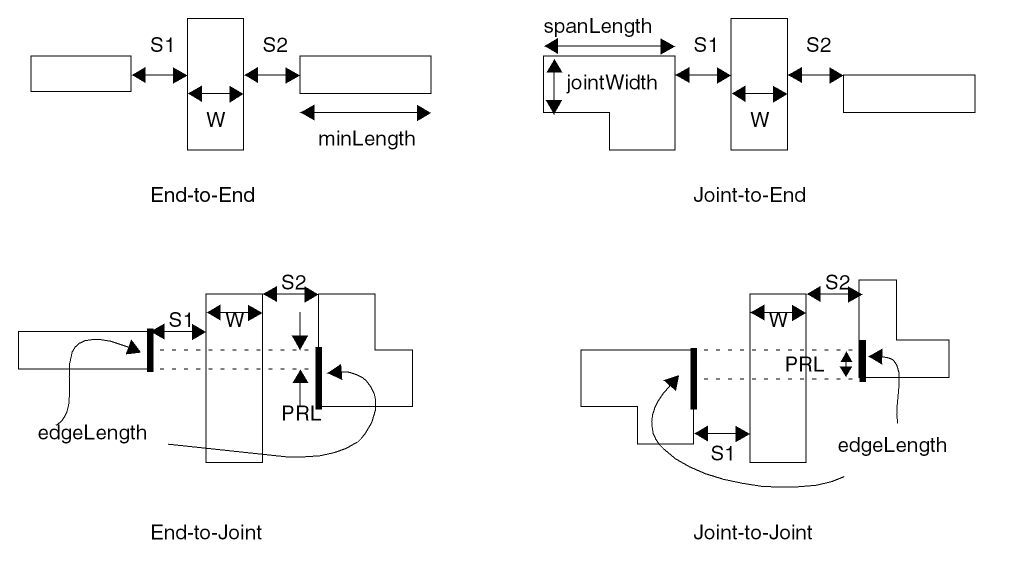
The constraint specifies spacing for each of the four neighbor categories (End-to-End, End-to-Joint, Joint-to-End, and Joint-to-Joint) shown in the following figure.
minOppositeSpanSpacing Quick Reference
Value Type
minOppositeSpanSpacing constraints have a DualValueTbl that must include a DualValue for each of the four categories in the following table and must be specified in the same order as shown in the table.
| Category | DualValue (S1 S2) |
|---|---|
- endSpacing specifies the minimum spacing between an end neighbor edge to the middle wire.
- jointSpacing specifies the minimum spacing between a joint neighbor edge to the middle wire.
- For End-to-End and Joint-to-Joint cases, either both neighbor spacings must be greater than or equal to the minimum of the specified spacings, or at least one neighbor spacing must be greater than or equal to the maximum of the specified spacings in End-to-End or Joint-to-Joint.
- For End-to-Joint and Joint-to-End cases, both End-to-Joint and Joint-to-End spacings must be fulfilled individually. To fulfill one statement, either the spacing between the middle wire and the joint must be greater than or equal to joint spacing, or the spacing between the middle wire and the end must be greater than or equal to end spacing.
The following table shows the syntax for setting the minOppositeSpanSpacing constraint.
Parameters
The following parameters are used to determine which neighboring shapes represent ends and joints and when the constraint applies.
-
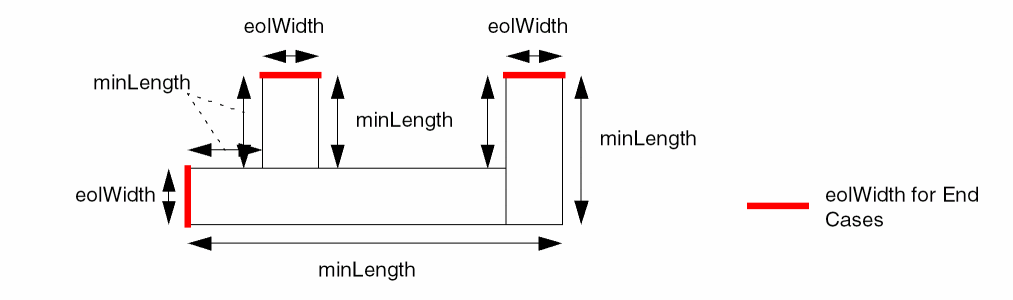
endOfLineWidth(Value) The constraint applies only when a neighbor end-of-line width (eolWidth) is less than this value. If thejointWidthparameter is not specified, theendOfLineWidthvalue is also used forjointWidth. eolWidth measurements are illustrated in Illustration of eolWidth and minLength for End-to-End Spacing. -
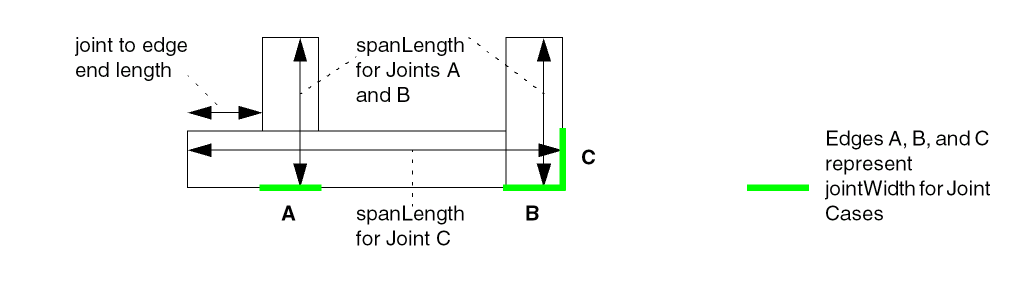
spanLength(Value) The neighbor wire end edge is a joint (and not an end) if it has eolWidth less thanendOfLineWidthand span (spanLength) greater than this value. Joints can be either a T or an L pattern. spanLength measurements are illustrated in Illustration of jointWidth, spanLength and jointToEdgeEndLength for Joint Spacing. -
width(Value) The constraint applies only when the middle wire is less than this value. -
jointWidth(Value, optional) The constraint applies only when a neighbor joint width is less than this value. If this parameter is not specified for the constraint, theendOfLineWidthvalue is used forjointWidth. -
jointToEdgeEndLength(Value, optional) The constraint applies only when the distance (jointToEdgeEndLength) from the end point of the joint to the end of the edge that contains the joint is greater than or equal to this distance. -
exceptEdgeLength(Value, optional) The constraint does not apply if both neighbor edges have a length (edgeLength) greater than or equal toexceptEdgeLengthand, optionally, a projected parallel run length (PRL) less than or equal tomaxLength. Neighbors can be ends or joints. -
exceptEdgeLengthPRL(ValueArrayValue, optional) TheValueArrayValueis mapped to a list ofDualValuecorresponding toexceptEdgeLengthandmaxLengthor to aValuecorresponding to justexceptEdgeLength. TheValueArrayValuecan contain up to two entries, as shown below:set_constraint_parameter -name exceptEdgeLengthPRL \ -ValueArrayValue { -DualIntValue { 0.072 0.01 } }
The constraint does not apply if both neighbor edges have a length (edgeLength) greater than or equal toexceptEdgeLengthand, optionally, a projected parallel run length (PRL) less than or equal tomaxLength. Neighbors can be ends or joints. -
exceptDualLength(Value, optional) The constraint does not apply if both neighbor edges have a length (edgeLength) greater than and or equal toexceptDualLength. Neighbors can be ends or joints. -
length(Value, optional) The constraint applies only when the end-of-line length (minLength) is greater than or equal to this value along both sides. minLength measurements are illustrated in Illustration of eolWidth and minLength for End-to-End Spacing. -
maxLength(Value, optional) The constraint does not apply if both the end or joint neighbor edges have a length (edgeLength) greater than or equal toexceptEdgeLengthand a projected parallel run length (PRL) less than or equal tomaxLength.
Examples
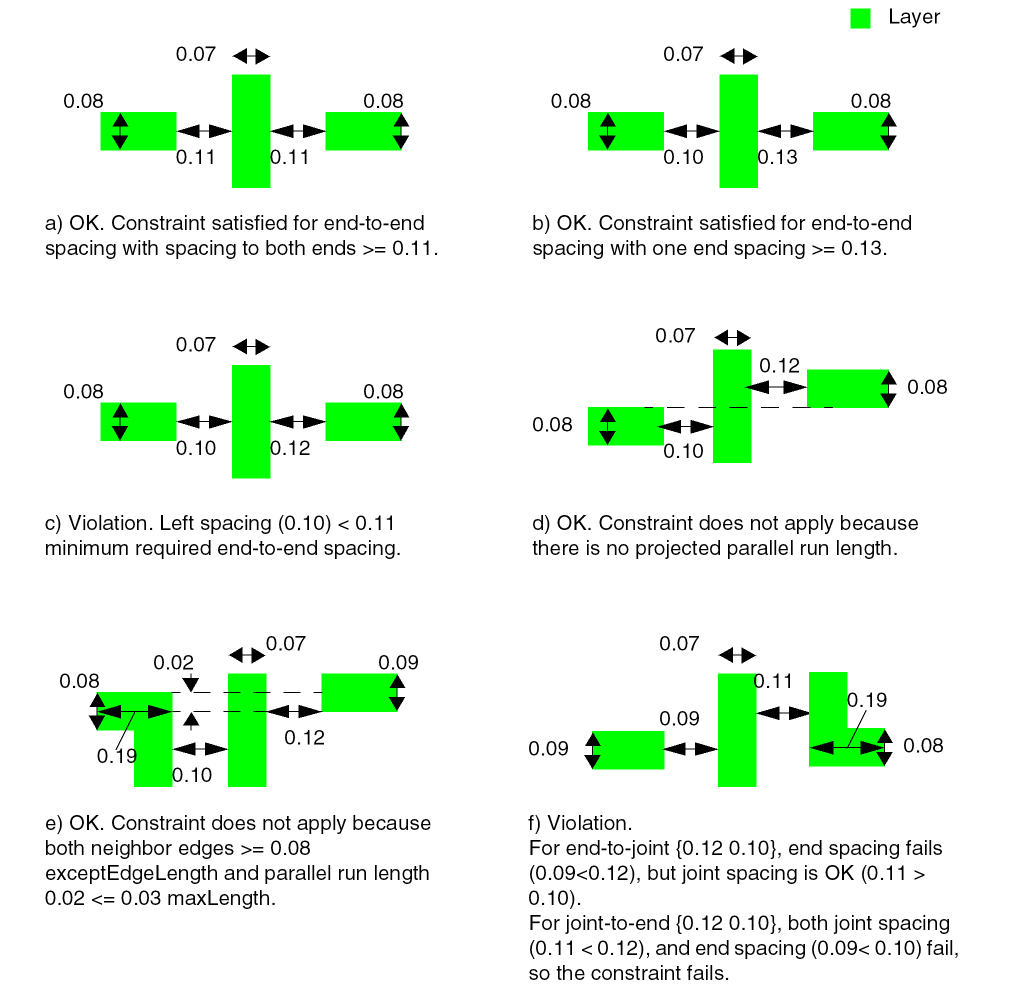
The following figure shows how the constraint is interpreted for this example.
Related Topics
Return to top