
Mfactored Component Cloning
Layout XL handles one-to-many relationships defined using the mfactor property on a schematic instance.
For example, if you have a component with an mfactor of 100, you can choose ten of these components, wire them together in the layout canvas, and then clone the resulting structure ten times to generate all the mfactored instances.
You can clone mfactored components both partially and in their entirety across multiple hierarchy levels, including source structures that include folded and abutted devices. The following limitations apply.
- The selected set must not include folded mfactored devices generated in a previous release; these must be regenerated in the current release.
- When cloning a folded instance, all the folds of the regular device or mfactored device part must be included in the clone source selection.
- When cloning mfactored devices that are partially implemented in the layout, you must select the clone source from the layout canvas.
The examples that follow illustrate what the cloning functionality considers to be valid targets for a number of different mfactored source structures.
- Example 1: Mfactored component instance
- Example 2: Mfactored component instance partially generated in the layout
- Example 3: One or more of multiple mfactored instances partially generated in the layout
- Example 4: Mfactored component instance with other component instances
- Example 5: One or more of an mfactored component instance partially generated in the layout along with other component instances
- Example 6: Although clone source contains only non-mfactored devices, clone target can use mfactored devices
- Example 7: Clone target uses parts of a device with an mfactor value greater than that on the clone source
- Example 8: No valid clone targets
Example 1: Mfactored component instance
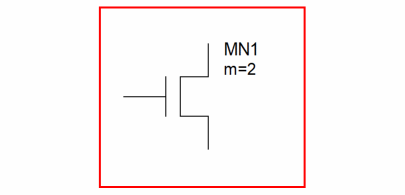
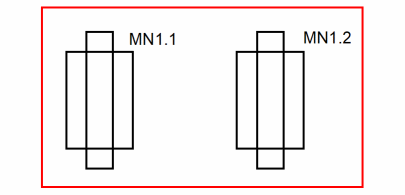
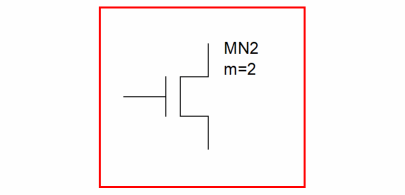
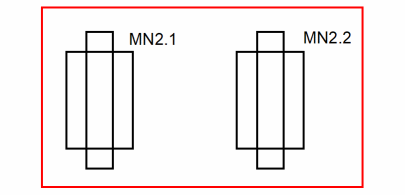
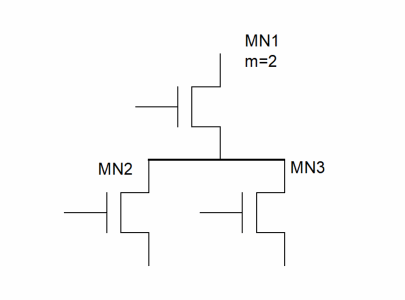
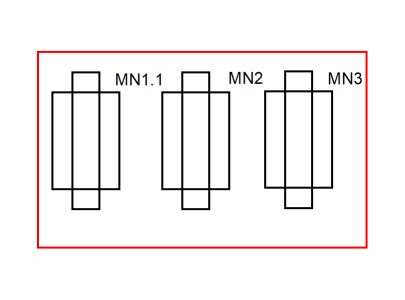
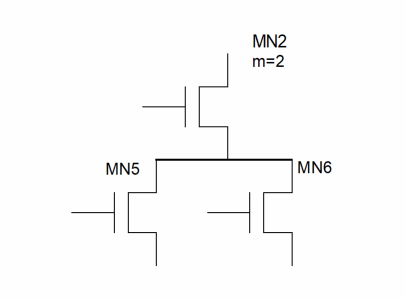
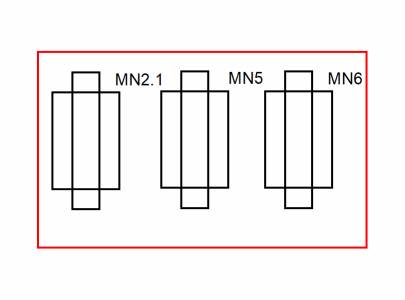
If the clone source is an mfactored component instance (for example, an NMOS instance with m=2), then the following are considered valid clone targets.
- Another mfactored component instance; for example, another nmos instance also with m=2 (see example below).
-
Two non-mfactored NMOS instances connected in parallel.
Schematic Layout
Example 2: Mfactored component instance partially generated in the layout
If the clone source is one or more parts of an mfactored component instance that is partially generated in the layout, then the following are considered valid clone targets.
- The remaining components in the mfactored instance (see example below).
-
The appropriate number of non-mfactored NMOS instances connected in parallel.
Schematic Layout
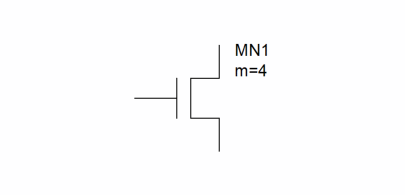
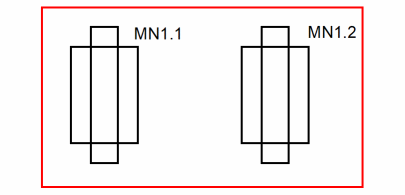
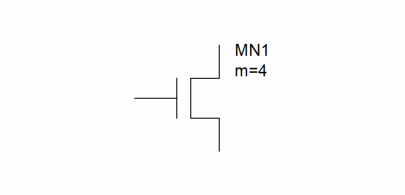
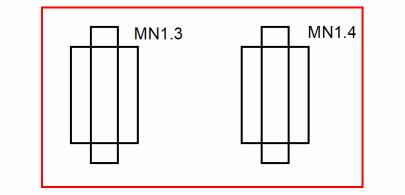
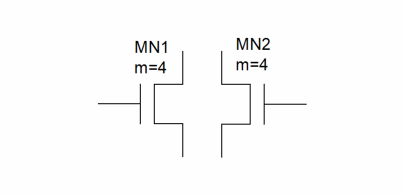
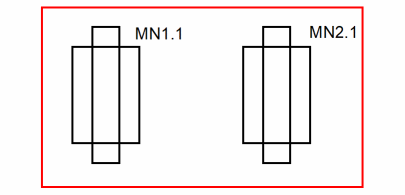
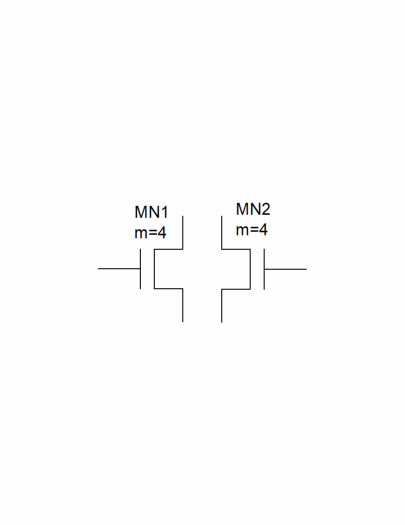
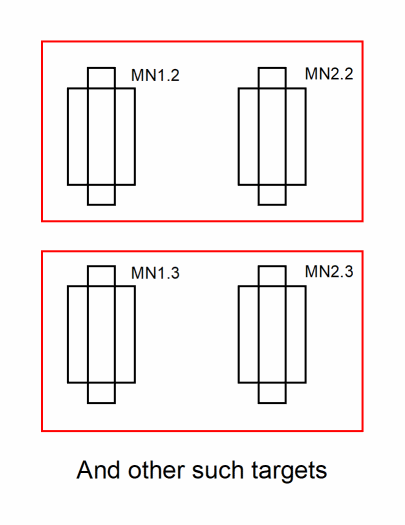
Example 3: One or more of multiple mfactored instances partially generated in the layout
If the clone source is one or more of multiple mfactored component instances that are partially generated in the layout, then the following are considered valid clone targets.
- The remaining mfactored component instances that follow the same pattern (see example below).
-
The appropriate number of non-mfactored NMOS instances connected in parallel.
Schematic Layout
Example 4: Mfactored component instance with other component instances
If the clone source is an mfactored component instance along with other component instances, then the following are considered valid clone sources.
- Any other identical configuration with mfactored component instances which have the same mfactor value.
-
The appropriate number of non-mfactored NMOS instances connected in parallel.
Schematic Layout
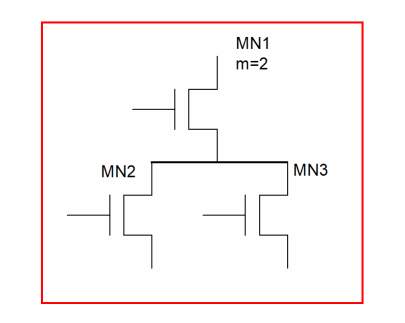
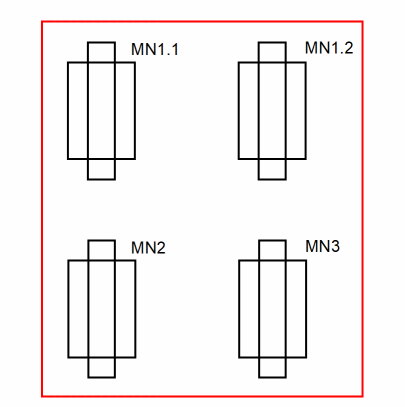
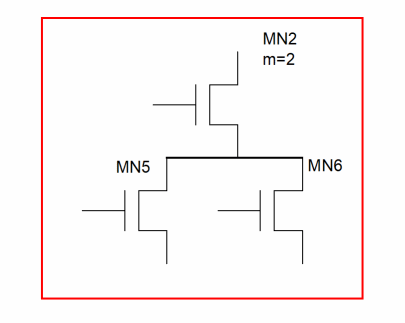
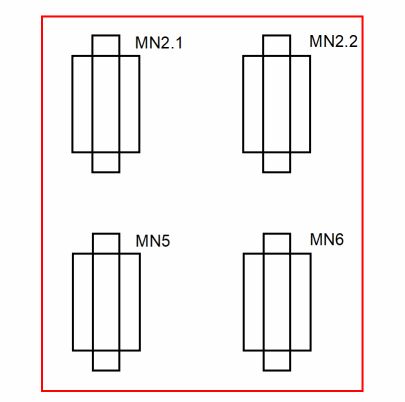
Example 5: One or more of an mfactored component instance partially generated in the layout along with other component instances
If the clone source is one or more of an mfactored component instance that is partially generated in the layout along with other component instances, then any configuration with the same topology but which only partially implements the mfactored components in the same way as the clone source is considered a valid clone target.
| Schematic | Layout | |
Example 6: Although clone source contains only non-mfactored devices, clone target can use mfactored devices
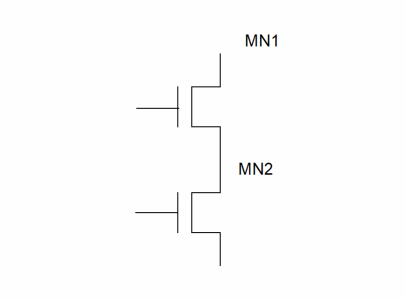
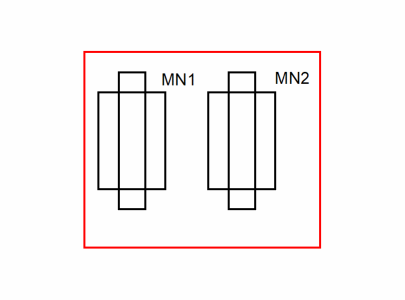
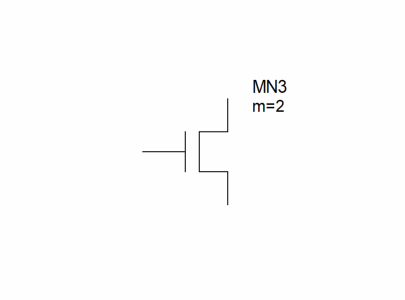
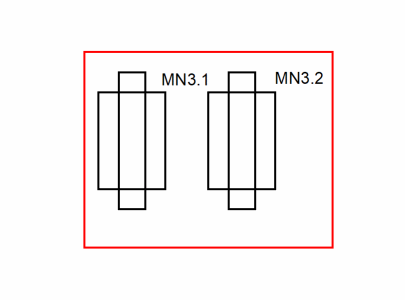
If the clone source is two non-mfactored NMOS instances connected in parallel, then the following can be considered valid clone targets.
- An mfactored NMOS instance with m=2
-
Parts of an mfactored NMOS mfactored instance with m>2
Schematic Layout
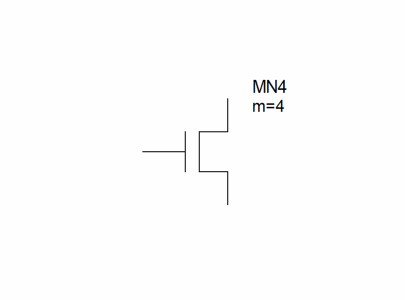
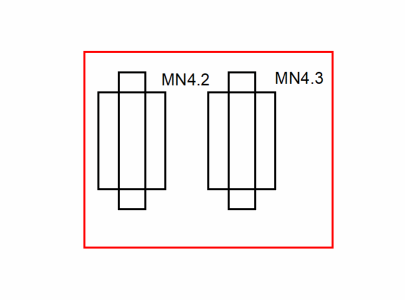
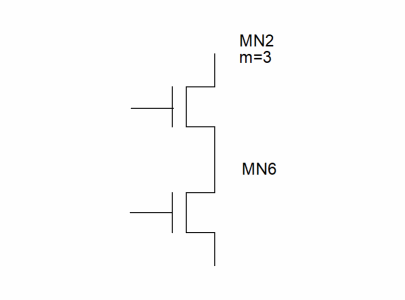
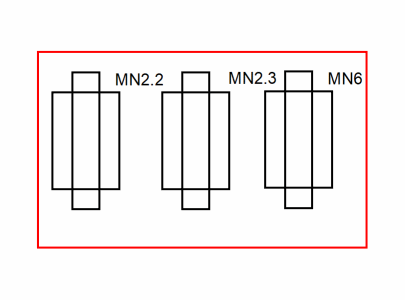
Example 7: Clone target uses parts of a device with an mfactor value greater than that on the clone source
If the clone source is an mfactored component (m=m1), which is fully realized in the layout, then the appropriate number of parts of an mfactored component (m>m1), is considered a valid clone target.
| Schematic | Layout | |
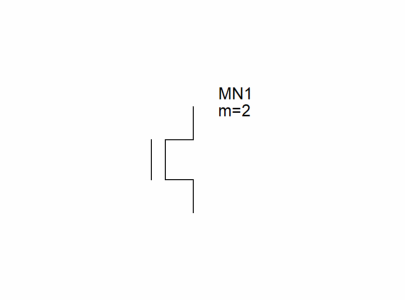
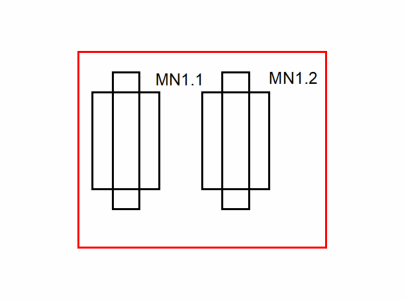
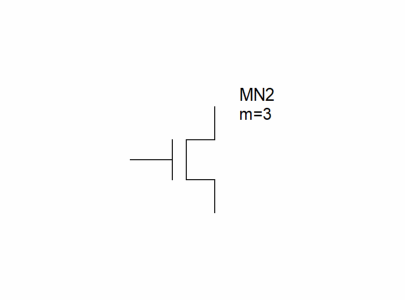
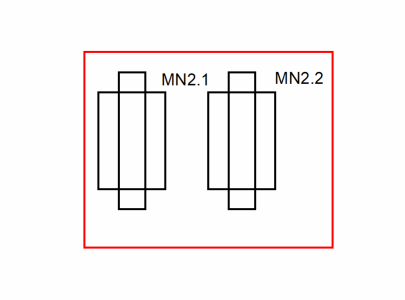
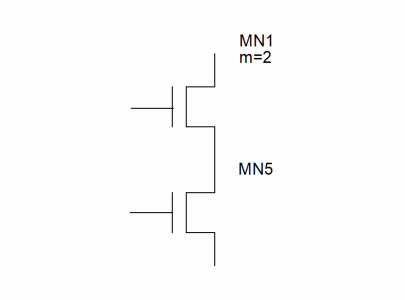
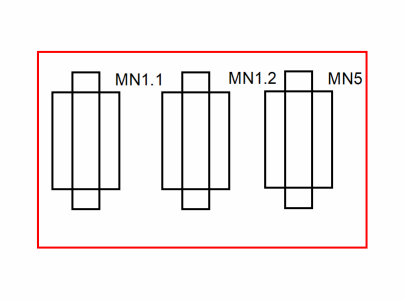
The same principle applies when devices with different mfactor values are combined with other devices.
| Schematic | Layout | |
Example 8: No valid clone targets
The clone source is a fully-implemented mfactored component (m=m1) and the schematic has the following other components that are not yet realized in the layout:
- Another mfactored component with the same master (where m<m1).
- Another non-mfactored component with the same master.
The clone source is = MN1.1, MN1.2, and MN1.3 (m=3 in schematic)
The schematic also contains MN2.1 and MN2.2 (m=2 in schematic) and a non-mfactored instance MN3.
In this case there are no matching targets for the clone source.
Related Topics
Return to top