|
APR Finders
|
Description
|
|
APR Analog Device Group from DI
|
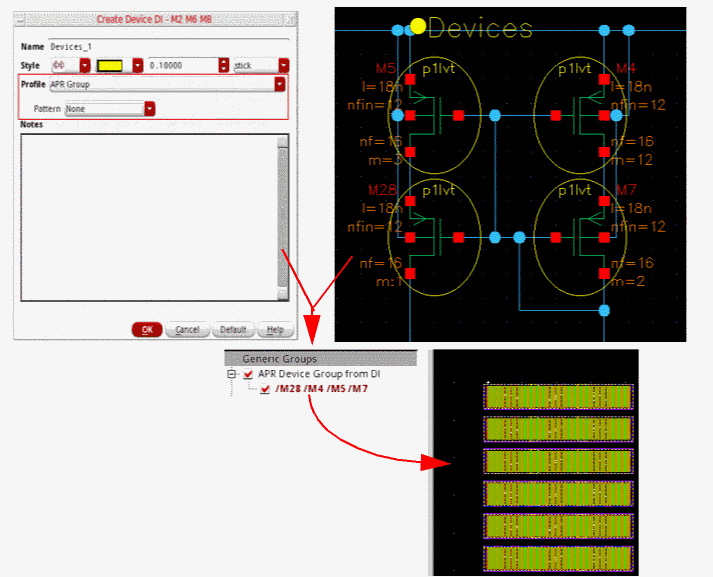
Groups APR Group Design Intent structures that are set in schematic.
In the schematic cellview, a Design Intent (DI) can be created for devices that have their Profile set to APR Group. The APR Device Group from DI constraint finder recognizes such devices and places them in a group.
|
|
APR Custom Digital Device Group from DI
|
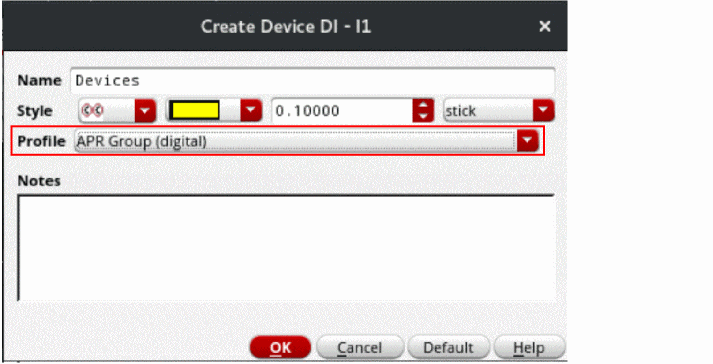
Groups APR Group (digital) Design Intent structures that are set in schematic.
In the schematic cellview, a DI can be created for devices that have their Profile set to APR Group (digital).
The APR Custom Digital Device Group from DI constraint finder in the Auto P&R assistant recognizes such devices and places them in a group as complimentary pairs (P and N chained devices).
|
|
APR Device Symmetry from DI
|
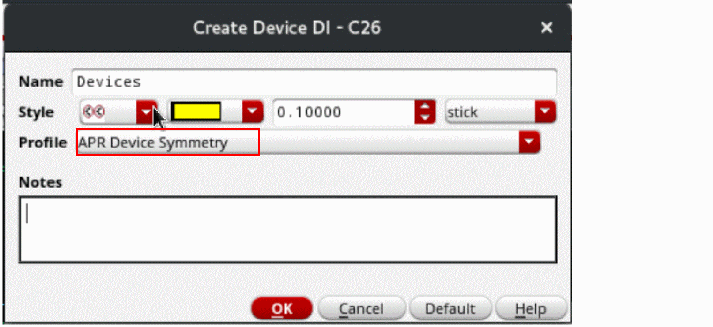
Groups APR Device Symmetry Design Intent structures that are set in schematic.
In the schematic cellview, a DI can be created for devices that have their Profile set to APR Device Symmetry.
The APR Device Symmetry from DI constraint finder in the Auto P&R assistant recognizes the devices on which placement and routing symmetry constraint design intents are defined in the schematic. These devices are grouped.
|
|
APR Net Shielding from DI
|
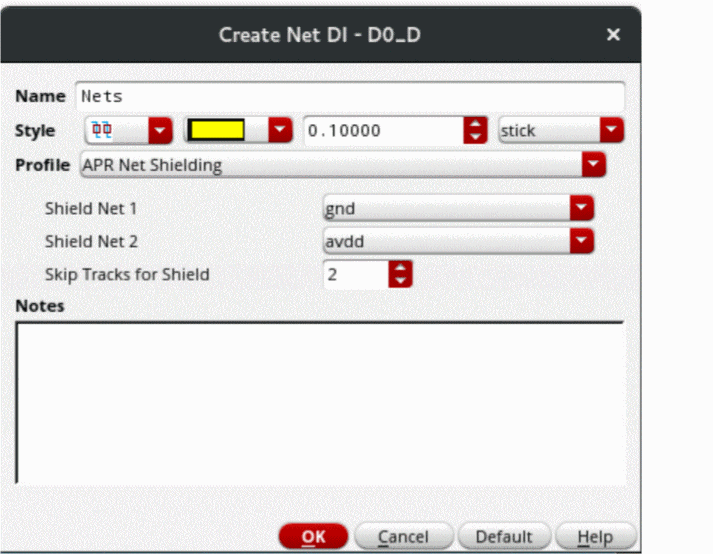
Groups APR Net Shielding Design Intent structures that are set in schematic.
In the schematic cellview, a DI can be created for nets that have their Profile set to APR Net Shielding. This DI supports only parallel shielding, which comprises a shielding wire on the left and right side of the selected net.
The APR Net Shielding from DI constraint finder in the Auto P&R assistant recognizes the nets on which net shielding design intents are defined in the schematic. These devices are grouped.
|
|
APR Net Symmetry from DI
|
Groups APR Net Symmetry Design Intent structures that are set in schematic.
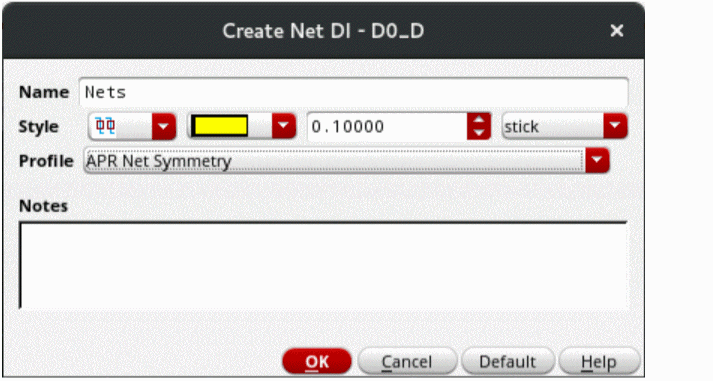
In the schematic cellview, a DI can be created for nets that have their Profile set to APR Net Symmetry.
The APR Net Symmetry from DI constraint finder in the Auto P&R assistant recognizes the nets on which net symmetry design intents are defined in the schematic. These devices are grouped.
|
|
APR Stack of Series Diffpair
|
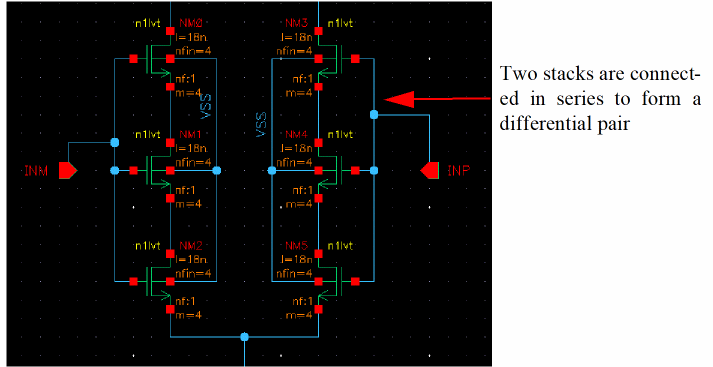
Groups devices when there are more than one stacks connected in series forming a differential pair structure.
The devices must also have:
-
A common bulk, if present.
-
The same cell name.
-
The same size (length and width) and fins.
|
|
APR Differential Pair
|
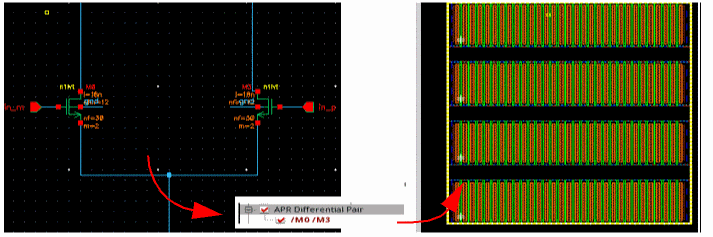
Groups devices that form a differential pair structure.
The devices must also have:
-
A common bulk, if present.
-
The same cell name.
-
The same size (length and width), mfactor, fins, and fingers.
|
|
APR Differential Pair - Cross Coupled
|
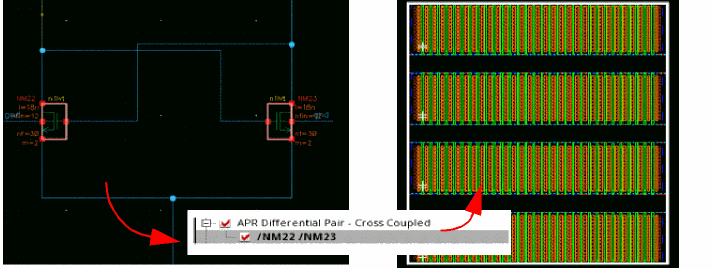
Groups devices that form a cross-coupled differential pair structure.
The devices must also have:
-
A common bulk, if present.
-
The same cell name.
-
The same size (length and width), mfactor, fins, and fingers.
|
|
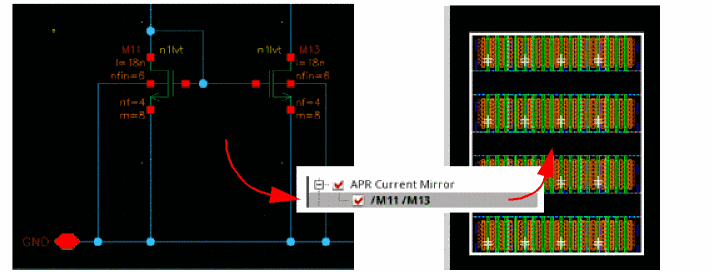
APR Current Mirror
|
Groups devices that form a current mirror structure.
The devices must also have:
-
The same size (width and length), fins, and fingers.
-
The same cell name.
|
|
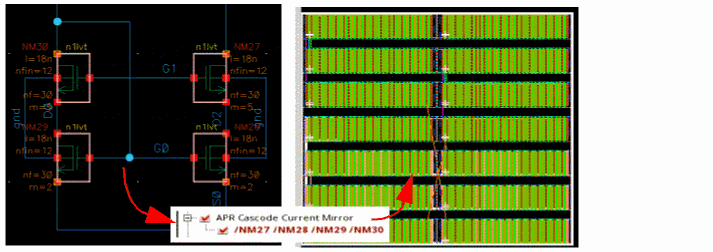
APR Cascode Current Mirror
|
Groups devices that form a cascoded current mirror structure.
The devices must also have:
-
The same cell name.
-
The same size (width and length), fins, and fingers.
|
|
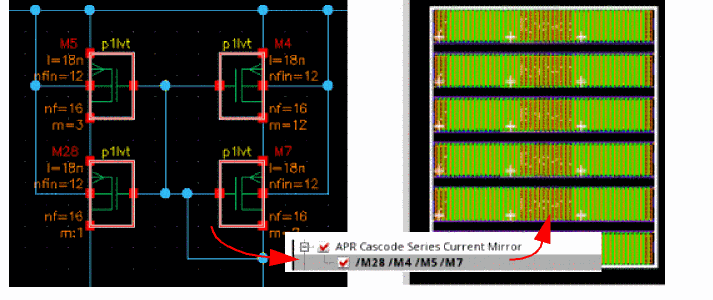
APR Cascode Series Current Mirror
|
Groups devices that form a cascoded series current mirror structure.
The devices must also have:
-
A common gate.
-
The same cell name.
-
The same size (width and length), fins, and fingers.
|
|
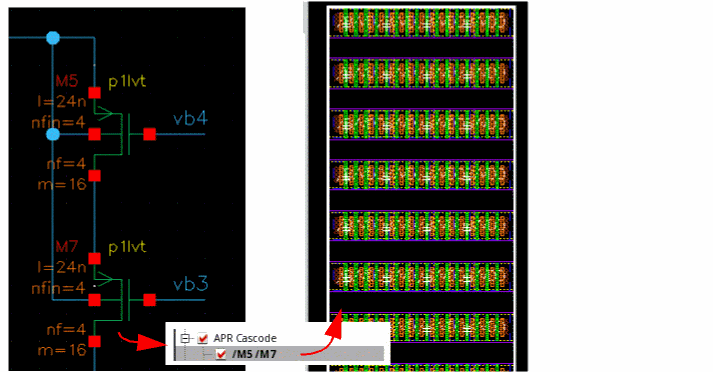
APR Cascode
|
Groups cascoded MOS transistor structures.
The devices must also have:
-
A common gate.
-
The same cell name.
-
The same size (width and length), fins, and fingers.
-
A common bulk terminal, if any.
|
|
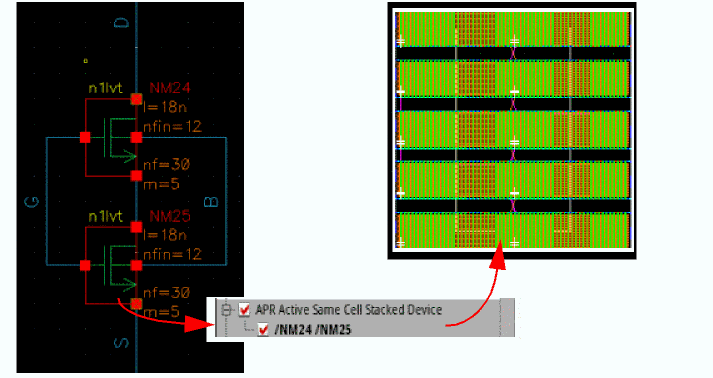
APR Active Same Cell Stacked Device
|
Groups transistors in series stacks.
The devices must have common gate and bulk terminals, if any. Also, the devices must be connected in series, where the drain of one device is connected to the source of the next device.
Also, the devices must have the same size (length and width), number of fins, number of fingers, and mfactor.
|
|
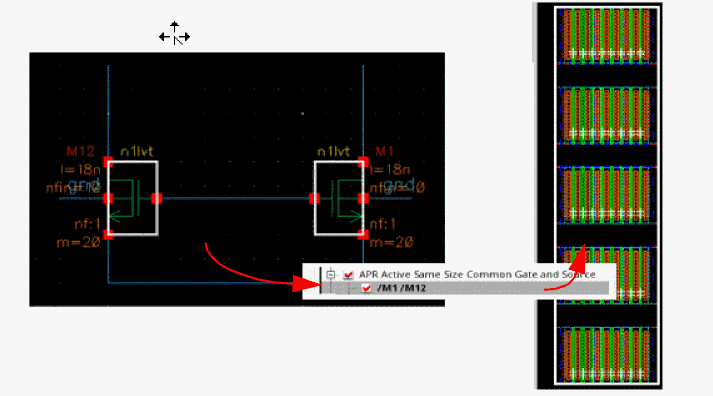
APR Active Same Size Common Gate and Source
|
Groups same-sized (same length and width) devices with the same gate and source connections.
|
|
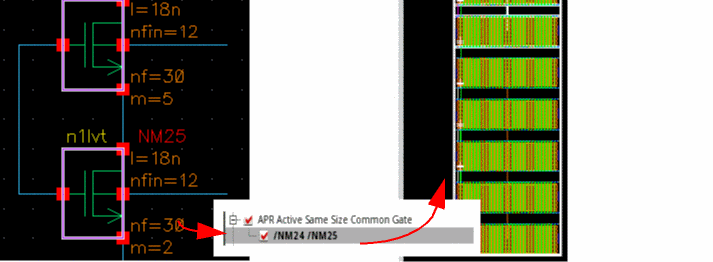
APR Active Same Size Common Gate
|
Groups same-sized devices (same length and width) that share the same gate connection.
|
|
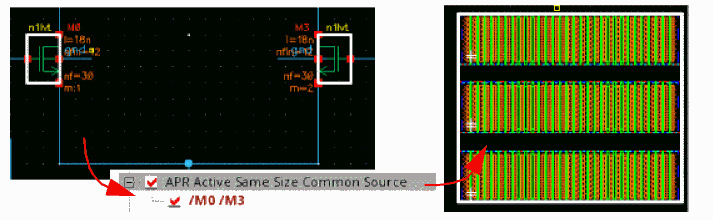
APR Active Same Size Common Source
|
Groups same-sized (same length and width) devices with the same source connection.
|
|
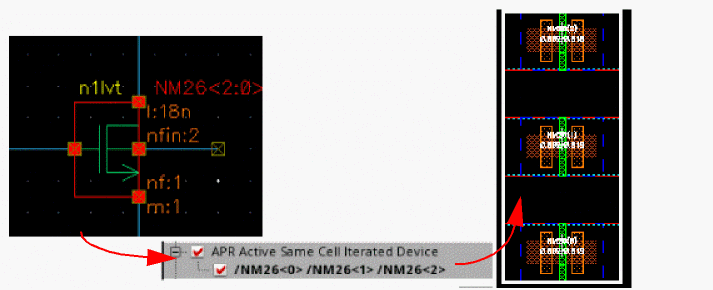
APR Active Same Cell Iterated Device
|
Groups iterated devices.
|
|
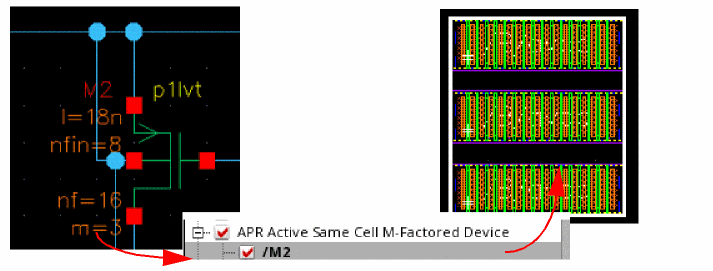
APR Active Same Cell M-Factored Device
|
Groups active devices with mfactor.
|
|
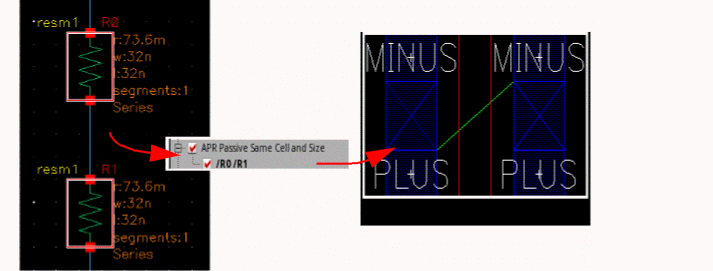
APR Passive Same Cell and Size
|
Groups passive devices with same cell names or the same cell sizes and values.
If more than one passive devices are found in a single group, the tool checks for devices with the same cell name, size, and value.
|
|
APR User Defined Group
|
Groups device groups inside text boxes.
|
|
APR Series Resistor Array
|
Groups arrays of sequentially-arranged resistors that form the longest serial chain between two nets. The series chain terminates at a branch that connects to multiple resistors. Branches that connect to devices other than resistors are ignored.
|
|
APR MOS Capacitor
|
Groups MOS capacitors in the design.
MOM capacitors are listed under the APR Passive Same Cell and Size finder, and have a higher priority in the constraints tree.
|
|
APR Instances (Symmetry By Connectivity)
|
Groups pairs of instances that are determined to be symmetric based on their connectivity.
|
|
APR Instances (Symmetry By Connectivity with common source or drain)
|
Groups pairs of instances that are determined to be symmetric based on their connectivity with a common source or drain.
|
|
APR Pins (Symmetry By Connectivity)
|
Groups pins that are determined to be symmetric based on their connectivity.
|
|
APR Nets (Symmetry By Connectivity)
|
Groups nets that are determined to be symmetric based on their connectivity.
|