
minDualEndOfLineExtension
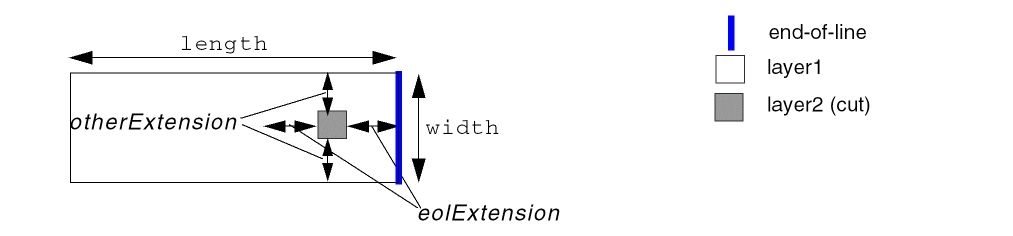
Some processes need to specify an end-of-line enclosure rule that applies only if no shapes on other nets lie in the rectangular regions around the side and end of the line. The two-layer minDualEndOfLineExtension specifies the extension of the first layer (layer1) beyond a shape on the second layer (layer2). The second layer is expected to be a cut layer.
This constraint is not symmetric.
minDualEndOfLineExtension Quick Reference
Value Types
minDualEndOfLineExtension constraints have a DualValue. The first value is the extension, in user units, of layer1 beyond layer2 at the end-of-line (eolExtension). The same extension is also required on the opposite side of the layer2 shape. The second value is the extension, in user units, of layer1 beyond layer2 on either side (otherExtension).
Parameters
-
width(Value, required) specifies that the constraint only applies if the width of the end-of-line is less than this value. -
length(Value, optional) specifies that the constraint only applies if the length of the end-of-line is greater than or equal to this value. -
endOfLineOnly(BoolValue, optional) If settruefor a given constraint, it should be true for all minDualEndOfLineExtension constraints for the same cutClass and layer pair. If only one constraint has the endOfLineOnly parameter, that constraint should be observed and the others ignored. If this parameter istrue, then for all end-of-line edges, onlyminDualEndOfLineExtensionconstraints must be satisfied; any other enclosure type rules for that layer pair/cut class, such asminDualExtension, can be ignored. -
cutClass(DualValue, optional) identifies the cut class to which the constraint applies given the cut width and height. -
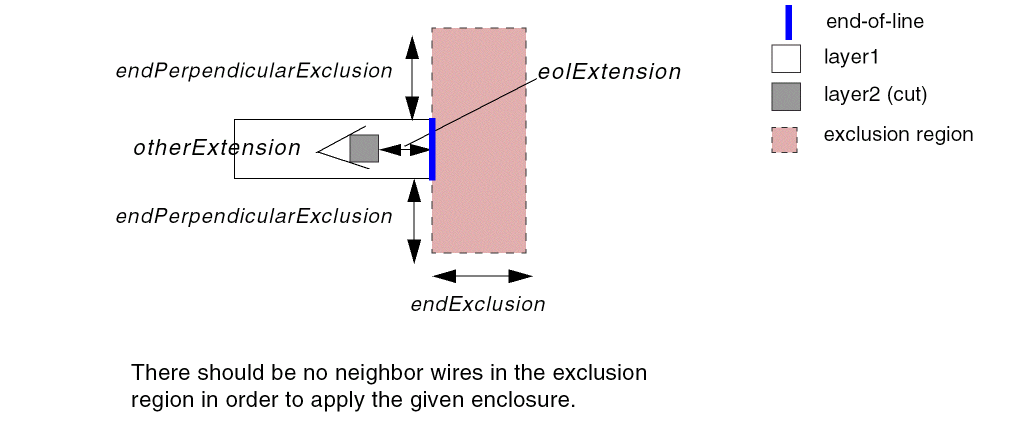
endExclusionArea(DualValue, optional) specifies that the constraint only applies if there are no different-net neighbors in the rectangular area at the end of the line. The first value is the distance on either side of the line end (endPerpendicularExclusion); the second value is the distance past the end-of-line (endExclusion) shown in Figure . -
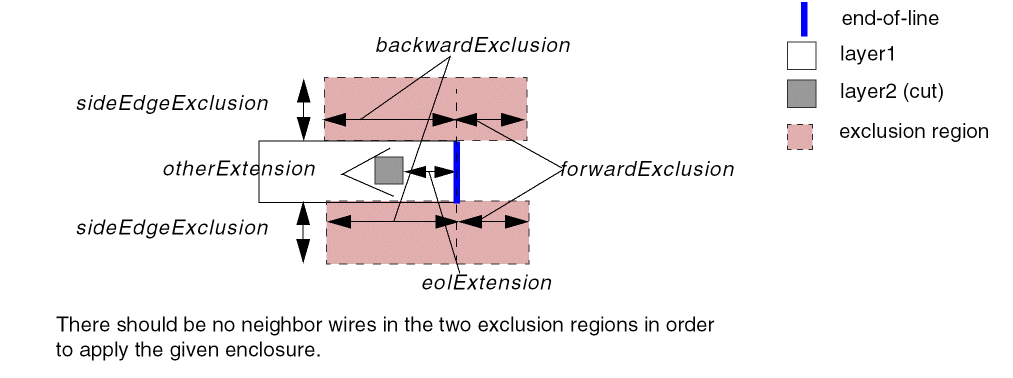
sideExclusionArea(ValueArrayValue, optional) specifies an exclusion area at either side of the line. The area is defined by three Values—sideEdgeExclusion, backwardExclusion, and forwardExclusion—shown in Figure . The constraint only applies if there is no different-net neighbor shape in that region. -
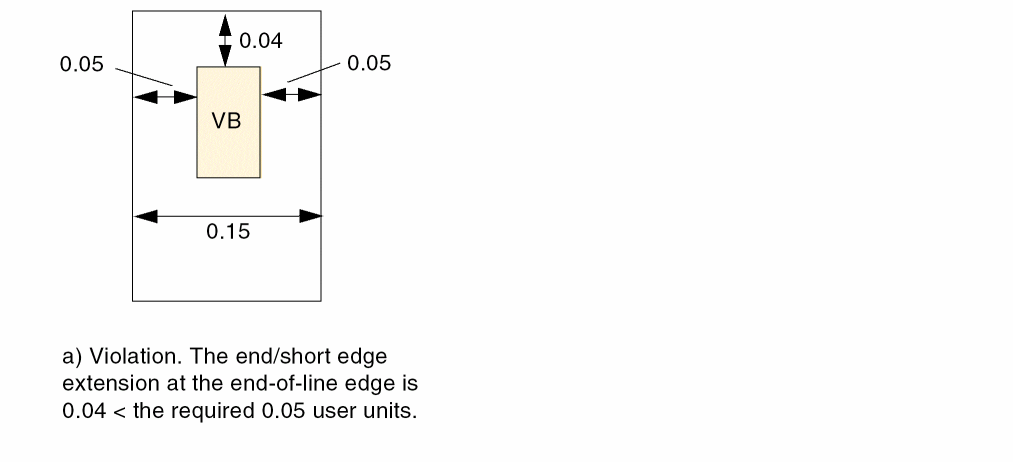
shortEdgeOnEol(BoolValue, optional) When set totrue, specifies that the first value (eolExtension) must be applied to the end/short edges of the cut and the second value (otherExtension) must be applied to the long sides of the cut. This parameter must be used with thecutClassparameter for rectangular cut vias.
Examples
Example 1—minDualEndOfLineExtension with endExclusionArea and sideExclusionArea
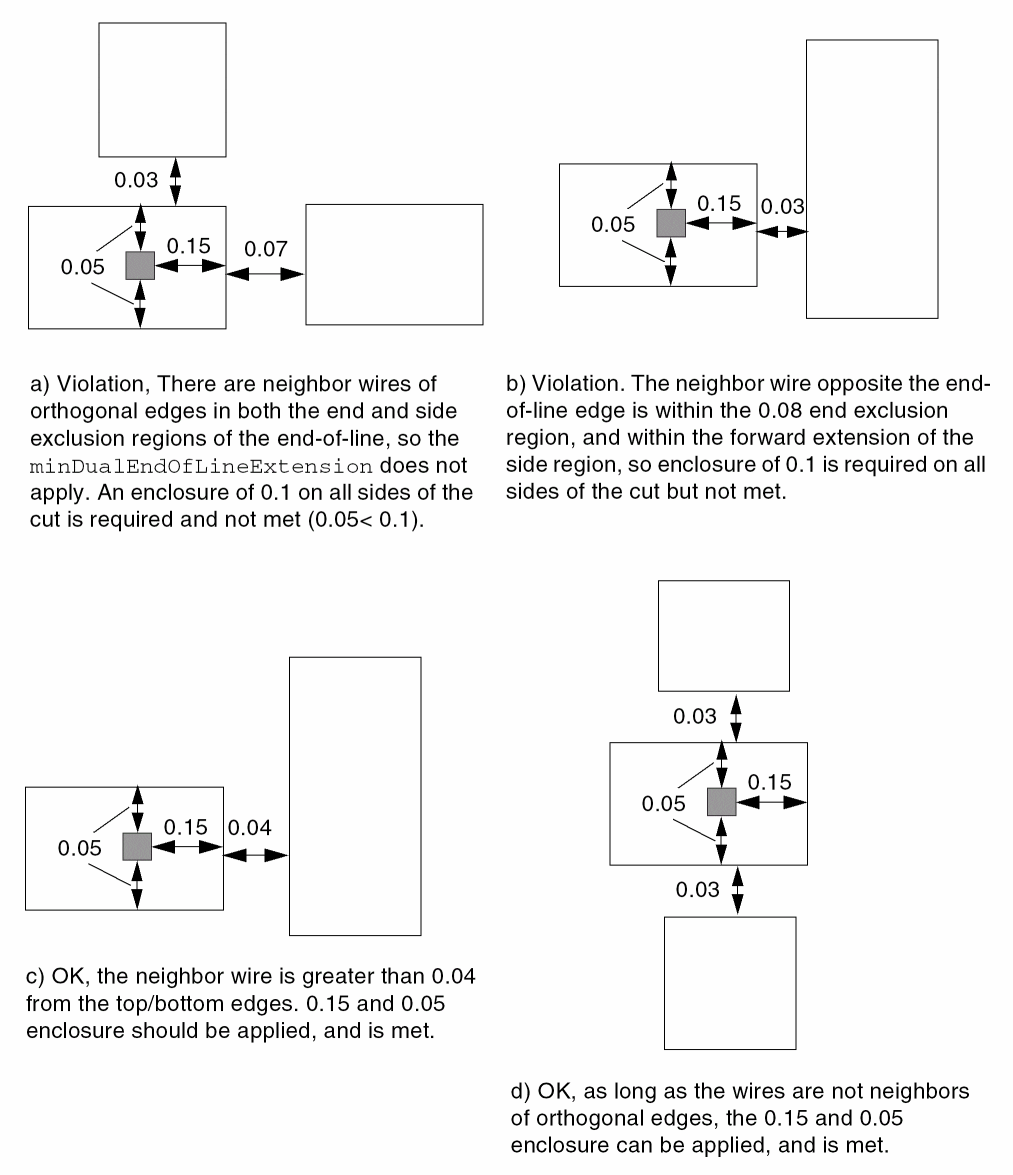
In this example, an Metal1 or Metal2 extension of 0.1 μm on all sides of a V1 cut is required. However, if the cut is on an end-of-line, then an extension of 0.15 μm is required to the end-of-line edge and on the opposite side of the cut, and 0.05 μm is required on the sides of the cut if there are no neighbor wires within 0.04 μm of the line side edges with back and forward exclusion extensions of 0.03 μm or within 0.08 μm of the end-of-line edge with a perpendicular extension of 0.06 μm to the sides.
Example 2—minDualEndOfLineExtension with shortEdgeOnEol
In this example, the end/short edge of a VB cut (0.04 x 0.08 rectangular cut) on cut layer V1 must have a Metal1 or Metal2 extension of 0.05 user units and the long sides must have an extension of 0.04 user units.
Related Topics
Return to top