
minEndOfLineExtension
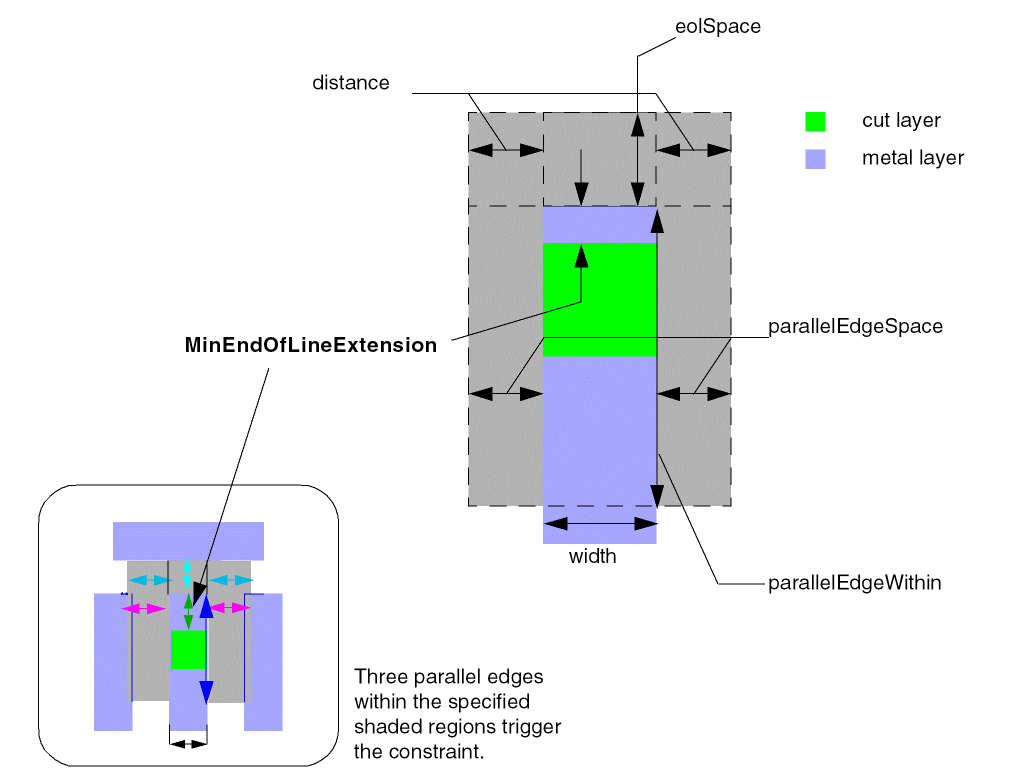
Sets the minimum extension of wire on a metal layer with respect to a cut layer when the wire has adjacent, parallel edges on three sides within the specified regions. If this constraint is not specified, or if it is specified but there are no parallel edges on three sides within the specified regions, a wire is extended beyond a cut shape dependent only on the minExtension constraint.
Important differences between minEndOfLineExtension and minExtension are:
-
minExtensionapplies to a cut layer and sets the minimum extension for wires both above and below the cut layer. -
minExtensionis not dependent on the end-of-line wire width.
minEndOfLineExtension Quick Reference
Value Type
minEndOfLineExtension constraints have a Value that represents the minimum end-of-line extension that must be added when adjacent shapes satisfy the criteria defined by the five parameters.
Parameters
The minEndOfLineExtension constraint requires five parameters to specify when the constraint applies:
-
width(Value) specifies the maximal width of the end-of-line wire (eolWidth). The constraint applies when the end-of-line wire width is less than this value. -
eolSpace(Value) specifies the end-of-line spacing. Combined withdistance, the two parameters define the lateral verification region. -
distance(Value) specifies the verification distance for the end-of-line within distance. Combined witheolSpace, the two parameters define the lateral verification region. This constraint applies if there is a parallel edge in the lateral verification region and two parallel edges in the region defined by theparallelEdgeSpaceandparallelEdgeWithinparameters. -
parallelEdgeSpace(Value) specifies the distance perpendicular to the end-of-line wire that parallel wires must lie within on both sides of the end-of-line wire for this constraint to apply. -
parallelEdgeWithin(Value) specifies the distance within which parallel wires are evaluated. If there are parallel wires within this distance on both sides of the end-of-line wire, the constraint applies.
Examples
Related Topics
Return to top